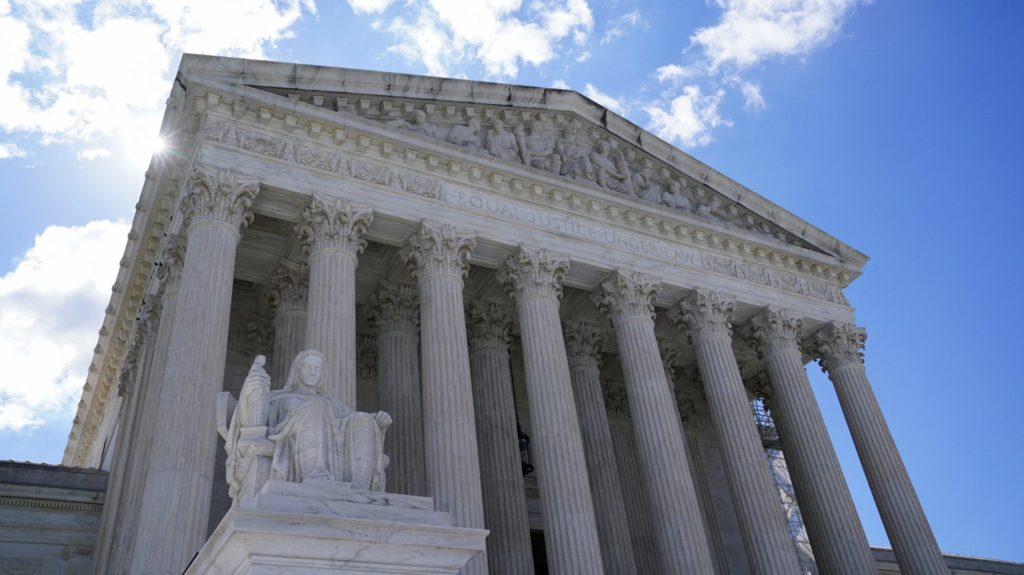
In a landmark decision on March 2, the U.S. Supreme Court held that the state of California cannot keep student “transgender” identities secret from parents, with the justices ruling that the secretive policies likely violate the First Amendment rights of parents whose children believe themselves to be the opposite sex.
The 6-3 ruling was announced by the Thomas More Society, a religious liberty law firm that has represented parents and teachers through the legal fight, one that has spanned nearly three years and multiple courts.
U.S. District Court Judge Roger Benitez originally ruled in the class action lawsuit on Dec. 22, 2025, that parents “have a right” to the “gender information” of their children, while teachers themselves also possess the right to provide parents with that information.
Benitez issued an order at the time striking down California’s secretive school gender policies. In January the U.S. Court of Appeals for the 9th Circuit blocked that order amid the ongoing lawsuit, which the plaintiffs then appealed to the Supreme Court.
On March 2 the Supreme Court blocked the appeals court ruling, holding in part that California’s policies “substantially interfere” with the “right of parents to guide the religious development of their children.”
Pointing to earlier precedent on parental rights, the court said that parents enjoy “the right not to be shut out of participation in decisions regarding their children’s mental health.”
“Gender dysphoria is a condition that has an important bearing on a child’s mental health, but when a child exhibits symptoms of gender dysphoria at school, California’s policies conceal that information from parents and facilitate a degree of gender transitioning during school hours,” the court said.
“These policies likely violate parents’ rights to direct the upbringing and education of their children.”
Thomas More Society attorney Paul Jonna called the ruling a “watershed moment for parental rights in America.”
“The Supreme Court has told California and every state in the nation in no uncertain terms: You cannot secretly transition a child behind a parent’s back,” Jonna said.
“The court’s landmark reaffirmation of substantive due process, its vindication of religious liberty, and its approval of class-wide relief together set a historic precedent that will dismantle secret gender transition policies across the country.”
In his December 2025 ruling, Benitez had ordered that parents have a right to transgender-related information regarding their children on grounds of the 14th and First Amendments.
Teachers, he said, can also assert similar First Amendment rights in sharing that information with parents.
“Even if [the government] could demonstrate that excluding parents was good policy on some level, such a policy cannot be implemented at the expense of parents’ constitutional rights,” Benitez wrote at the time.