
The Beauparlants looked like the kind of Catholic family parishes dream about: six children, weekly Mass-goers, and deeply engaged in their faith. Allison, then 46, and Ted, 50, had been married for 19 years. Not many who knew them would have seen the crisis coming.
“I stepped outside of the marriage,” Ted said, “and as a result, it completely broke down.”
The couple sought immediate help. As children of divorce and attorneys who litigate them, they knew firsthand the fallout that awaited their family.
“You don’t get to that point overnight,” Allison admitted. “It was a long, slow slide to the point where we were basically living as roommates, not husband and wife. We had been so busy raising our kids that we didn’t realize how distant we had become until it was glaring.”
Dan Meola was 26 when his parents’ divorce was finalized. It was traumatic, but not a shock: at the age of 11, Dan found a note from his father who had moved out. “I’m doing this for you,” he wrote, saying he wanted to spare his son the pain of watching his parents fight.
“My parents were practicing Catholics, even leading marriage prep,” Meola said. “Their split destroyed my faith.” Their attempts at reconciliation over the years failed. While his mother remained single as a commitment to her vows, his father eventually remarried outside of the Church.
“As an adult child of divorce, I’ve pretty much been told to ‘get over it,’ ” he said. “People think, ‘You’re an adult now, you have your own life,’ like it should roll off our shoulders.”
But Meola knew that later divorces are no less destabilizing, leaving many adult children to wonder whether their family life was ever what it seemed.
“There are so many people like me, including many Catholics, who are silently suffering,” he said. “We’re just expected to stay quiet because divorce is so common.”

The phenomenon of “Gray Divorce” — the dissolution of marriage among couples aged 50 and older — was bound to hit Catholics. The number of couples splitting later in life and the generational views and behaviors of U.S. Baby Boomers have led to a tidal wave of later-in-life breakups, including those who were married in the Church.
Parishes, ministries, and tribunals are navigating this reality in real time. Since most of these marriages spanned several decades, their endings have repercussions for adult children, grandchildren, extended family, and friends.
When it comes to divorce, the Church has mainly focused on prevention (through pre-Cana marriage prep programs) and addressing the question of nullity, settled in its tribunals.
But higher rates of down-the-road divorce reveal that’s far from enough: more couples need help in the middle years of marriage as well as triage when they reach a breaking point.
Gray Divorce by the numbers
A 2025 Institute of Family Studies report now calculates a 40% failure rate for first marriages — actually an improvement from previous years — and early 21st-century marriages are already outlasting those of the previous generation.
But one cohort remains the exception.
American couples over the age of 50 are divorcing at double the rate they did in 1990, and the rates of divorce for Americans over 65 have tripled. In 2019, about 36% of all divorces involved people aged 50 or older. That figure, for now, remains steady.
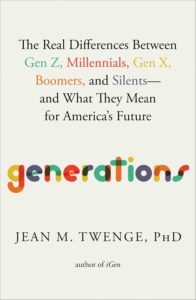
In her book “Generations: The Real Differences Between Gen Z, Millennials, Gen X, Boomers, and Silents — and What They Mean for America’s Future” (Atria Books, $13.89), psychologist Jean Twenge speculates that the jump in the divorce rate among Baby Boomers is related to their belief that marriage should go “beyond duty to satisfy the highest of expectations for sexual pleasure as well as companionship.”
Serious issues aside — abuse, coercion, a union entered without true freedom — many call it quits when a marriage falls short of that high bar, sometimes after decades of poor communication and disconnection.
And as The Wall Street Journal recently examined, the cost of divorce over 50 is high: downsizing and dividing assets leaves many worse off, as do fraying social networks and the loss of a partner with whom to weather declining health and aging.
Typically, the divorce rate for Catholics who attend Sunday Mass is lower than the general population, but Baby Boomers’ Mass attendance has been steadily declining for decades, dropping to 30% in recent years. Only 22% of Gen X, now in their 50s, attend each week.
While divorce is often couched as a personal decision, the social science is clear: its effects ripple forward across generations, affecting children as well as grandchildren who weren't even born at the time of the separation.
A landmark 2005 study found that divorce reduces educational attainment, increases marital discord, and weakens parent-child bonds in the grandchildren of those who divorced. A couple that divorces today more than doubles the likelihood that their own grandchildren will one day do the same.
The causes of marital unhappiness/separation
What drives so many couples in their mid-to-late life to divorce?
For many, the “empty nest” is a big factor. When the youngest child leaves home, many couples struggle to find their footing again as husband and wife.
“Even the beauty of raising children can lead to an exclusive focus on them to the detriment of the marriage,” said Father Jack Dickinson, judicial vicar for the Diocese of Portland, Maine.
As a parish priest and canon lawyer, Dickinson both prepares couples for marriage and oversees the tribunal that judges annulment petitions.
“I stress the need for couples to keep their marriage second only to their relationship to God,” he said. By prioritizing their relationship above other obligations, including professional ones, “they create the space to know and love their spouse and to be known and loved by them.”
Maintaining a friendship with one’s spouse is key to keeping a marriage strong when it hits its midpoint.
Ester Munt-Brooks, Catholic speaker of “Faith with Joy Talks,” stresses how important it is for couples to remain curious about each other.
She and her husband, Arthur Brooks, Harvard professor and best-selling author, have been leading pre-Cana and marriage mentorship programs in parishes for decades and bring social science and theological perspectives on happiness to their ministry.
“There is always more that you can know about the other person,” she said. “When we get comfortable, we take things about our spouses for granted. But we should stop and ask ourselves, ‘Why is he (or she) doing this?’ ”
“We should keep asking questions,” she said.
Health changes, especially the seismic shift women undergo during the decade-long transition to menopause, also play a role in marital discord.
Caroline Gindhart, a certified nurse practitioner at the University of Pittsburgh Medical Center Divine Mercy Women’s Health, noted that while some women navigate perimenopause with ease, others find it disrupts every dimension of daily life.
“Hormonal shifts trigger hot flashes, insomnia, mood swings, weight gain, painful sex, and diminished desire,” she said, all of which can strain marital intimacy and communication precisely when the empty nest is already reshaping a woman’s sense of who she is.
A few years after weathering that change, a couple can face the challenge of the husband’s identity crisis when he retires. Strip away the job, and many find they have lost not just an occupation but their primary source of purpose, routine, and belonging.
“I think in your 20s and 30s, you kind of feel invincible and you just keep going. You’re running on your energy,” Allison Beauparlant said. “As you get into your 40s and 50s, you start to think, ‘What is my life? Is this all there is?’ ”
The frontlines
Will the uptick in Gray Divorce continue, or is it a generational anomaly? The data is inconclusive. In the meantime, Catholics are among those trying to help change the course one couple and one individual at a time.
Gindhart said that practitioners of NaProTechnology, including many Catholics, are on the front end of new interventions to help women through menopause.
Hormone replacement therapy, Gindhart said, “can be very effective in some women.” Unlike cancer-causing synthetic hormones that were given to women in the past, today’s therapy works with bioidentical hormones to replace the ones that are lost.
“We’ve seen many relationships improve when a woman has better symptom management," she said.
When their marriage was at its lowest point, Ted and Allison attended a weekend retreat in 2012 with Retrouvaille, a Christian program for marriages in crisis that began in Canada in 1977.
The Beauparlants credit the retreat with saving their marriage. Today, they are presenters with Marriage Rediscovery, which was founded a few years ago by some former Retrouvaille leadership couples and priests but uses some of its teachings and practices. Since then, Marriage Rediscovery has been canonically recognized as a private association of the faithful by the Archbishop of Miami.
“Those 48 hours in 2012 changed everything,” Ted said. “We became presenters who have now shared our story more than 60 times in 15 different states.”
“Marriage Rediscovery" is like the ‘AA’ for couples in crisis,” Allison said. “The reason AA works is because people keep going. It’s not a one-time fix. You need constant support.”
After an initial retreat, participants are accompanied by small group in-person or virtual meetings for as long as they need.
After witnessing his parents’ marriage disintegrate, Meola sensed there were others like him who needed help with anger, anxiety, and fear that a lifelong vocational commitment was not possible.
“Most children of divorce don’t begin to confront their trauma until adulthood,” he said. “Sometimes all you need is somebody who will listen to you, grieve with you, and help you to take your next step in your faith life and your vocation,” he said.
In 2020, Meola’s peer-based, small-group ministry to adult children of divorce became a national nonprofit known as Life-Giving Wounds. The ministry is now in 31 dioceses. The demand is so great, Meola aims to open 50 college chapters in the next five years.
The ministry helps participants confront self-protective behaviors that were developed in response to their parents' divorce — habits that once helped them survive, but now interfere with their own adult relationships.
“We’ve seen people come back to the Faith. We’ve seen people who’ve sworn off marriage able to enter into marriage. We’ve helped priests and religious who were struggling to stay faithful to their vocation,” he said.
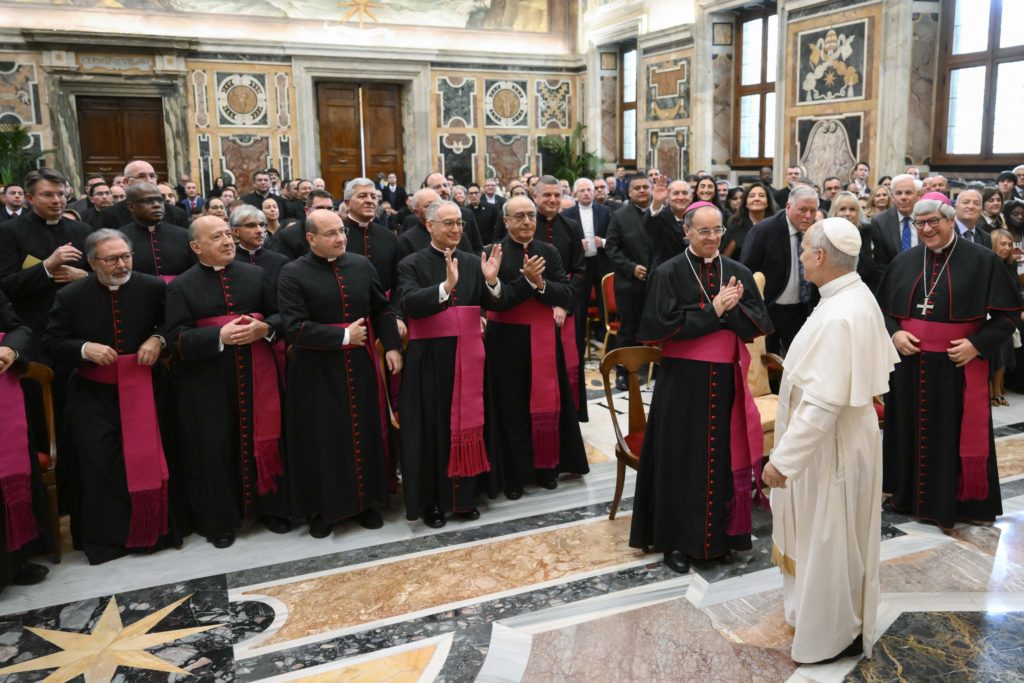
In a recent speech to the Roman Rota, Pope Leo XIV cautioned canon lawyers from granting annulments to divorced couples as a “false mercy,” something those on the frontlines welcome.
Dickinson noted that as a trained canonist, the pope recognizes the problem of a relaxed view when judging the validity of marriage.
“A canonical judge could fall into the mindset that a divorced person has had a hard life, so they deserve a chance at a healthy marriage by declaring them free to marry.” But, he continued, “the Holy Father is helping the whole Church recognize that the institution of marriage is bigger than any one of us.”
The Beauparlants hope that the stigma around asking for help will lessen. “We see a lot of recurring issues, like money management, infidelity, too much time on social media, pornography, and addictions,” Ted said. “But a couple that is hardworking and has God in their life has the best chance to work the program and be successful.”
When asked what gives them hope, Allison spoke about a couple in their 80s who recently went on a weekend retreat.
“They told us that they had basically tolerated a bad marriage for more than 50 years and just wanted to ‘get it right’ before the end,” she said. “You see? It’s never too late.”
Editor’s Note: A previous version of this article stated that "Marriage Rediscovery" was "formerly known as Retrouvaille." While Marriage Rediscovery was founded by former members of Retrouvaille International, it does not have any affiliation with Retrouvaille International, which continues to operate. We apologize for any misunderstanding.