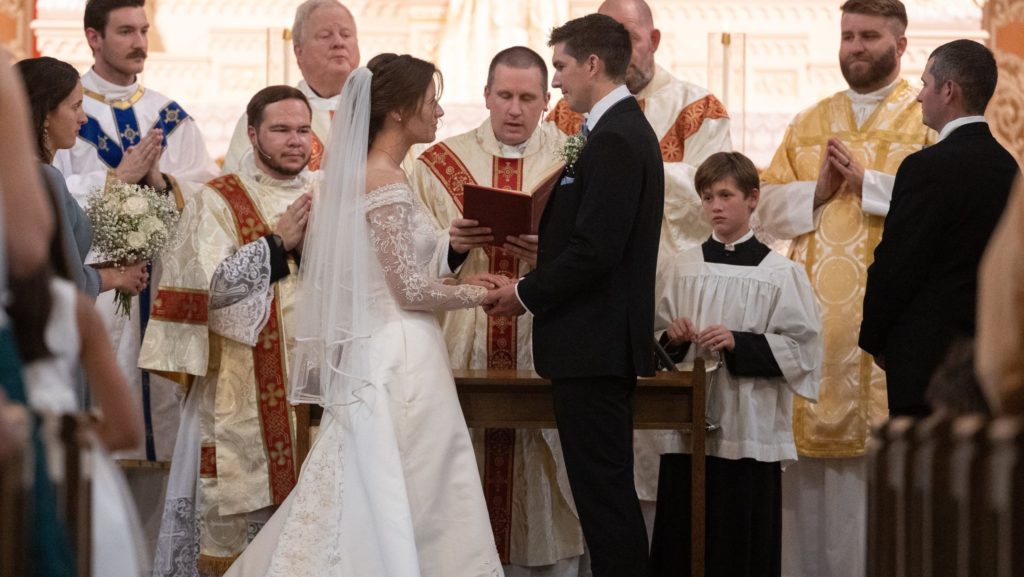
This October, Pope Leo XIV will gather the presidents of the bishops’ conferences, the heads of the Eastern Catholic Churches, and several families in Rome to discuss “the steps to be taken in order to proclaim the Gospel to families today” amid the “rapid changes” affecting the modern family.
While the meeting is timed to mark 10 years since Pope Francis’ apostolic exhortation “Amoris Laetitia” (“The Joy of Love”), Leo has added new, timely issues to the docket, including the precipitous decline of marriage and childbearing among young adults worldwide.
What was once a natural good (and a given of any civilization) now needs a global marketing plan.
Yet the exhortation — and some Church leaders — have left some questions unresolved. Chief among them is how to accompany couples who are divorced and civilly remarried, and whether they may receive the Eucharist, given the Church’s teaching on the indissolubility of marriage and Jesus’ teaching: “Whoever divorces his wife (unless the marriage is unlawful) and marries another commits adultery” (Matthew 19:9).
What should guide a pastor’s “discernment on a case-by-case basis” remains unclear to some, especially in light of Francis’ remarks about the primacy of conscience, his view that many marriages are null from the outset due to ignorance, and that the lived experience of the faithful often falls short of the marital “ideal.”
Indeed, many young people have parents in what the Church calls “irregular situations,” and as a result have questions about their origin, their marital prospects, and the credibility of a Church that might be permitting daylight between teaching and practice.
Exactly what is the Church proposing when she invites people to sacramental marriage? Is permanent, exclusive, and fruitful marriage only an ideal that can be realized by some? Or is the Church's teaching — and pastoral care that supports it — applicable and available to all the baptized?
The October meeting may or may not resolve these tensions, but it could serve as a step in that direction. Leo has praised his predecessor’s efforts to listen to and engage families directly, but he has also cautioned against letting subjective experience become the measure of morality.
“At times,” Leo told the Roman Rota earlier this year, “there is the risk that excessive identification with the often troubled circumstances of the faithful may lead to a dangerous relativization of the truth.” He cautioned against a “misguided compassion, even when … motivated by pastoral zeal.”
Leo shares Francis’ commitment to synodality — the practice of listening to people’s lived experiences and how Church teaching meets them — in order to strengthen the Church's evangelical mission.
Toward that end, I would suggest some preparatory reading from a woman who has timely things to say about our current conjugal conundrums: the newly translated “What Binds Marriage Together” (The Catholic University of America Press, $24.95), by Ida Friederike Görres.
Though Görres died in 1971 and wrote in the wake of the Second Vatican Council, her reflections read as if written today. Her primary objective was addressing critics of marriage in her day, including theologians and clerics who wanted to relax the Church’s teaching on indissolubility.
Many openly confessed to a tactic to “re-program the faithful” by starting with changes to pastoral practice around the Eucharist. Others admitted that if this teaching changed, so too might others related to sexuality and vocation.
Görres also wanted to highlight the heroic commitment of laymen and laywomen who remain faithful to their vows out of love for God, even in the most challenging circumstances: “I think of the unhappy ones who do not divorce because of this, of the divorced who forego a second marriage to someone newly discovered — staggering testimonies that He is the Lord,” she writes.
Görres certainly writes with eyes wide open. First, she expresses sympathy for well-meaning priests and Catholics who wonder why the Church would ask people to renounce their own happiness, especially when her contemporaries equate it with sexual fulfillment, “to which they say every person has a birthright.” In her time as in ours, the Church’s teaching on sexuality and marriage is perceived as a burden and repression instead of a teacher and safeguard.
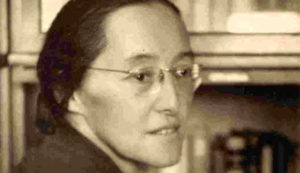
The same goes for lifelong commitment. What was once a “rootedness” and “a shadow of eternity” is now devalued or thought to be impossible. She laments that so many enter what she calls “trial marriages” with an exit ramp at the ready.
Second, she acknowledges that couples today no longer have what their ancestors did: a far-reaching structure to protect and support their vows, like a hard shell that encases a nut. “This protective and supportive housing of the past has long since been broken open, and the interior stands naked in an environment that has changed,” she writes.
Third, our culture equates marital love with eros, or romantic feeling and personal fulfillment. Eros is a good, but it is not what binds. Instead, Görres emphasizes fondness, which she likens to hardened clay, something “that can mature into the most beautiful, ‘benevolent’ love.”
No one can say to another, “I will always feel this way about you,” but we can all promise, “I will be good to you,” she writes.
While Görres has compassion, she does not mince words. Anyone who understands that marriage is a lifelong bond “knows or should know that all possible difficulties and crises have been factored in from the start,” she says.
Görres understands something articulated by Francis and Pope Benedict XVI in “Lumen Fidei” (“The Light of Faith”) many years after her death: “Precisely because all the articles of faith are interconnected, to deny one of them, even of those that seem least important, is tantamount to distorting the whole” (No. 48).
If the teaching on indissolubility is changed, she says the Church would have to change the revealed truth about God as Creator and Judge to “someone who commands nothing and forbids nothing that could stand in the way of our happiness.”
We’d have to change Christ, who “demands discipleship and carrying the Cross,” into a mere “do-gooder.”
We would no longer preach that the Church is where Christ abides in Scripture and the sacraments, but recast her as an organization existing “to carry out the will of the people instead of divine authority.”
And we’d have to reconsider ourselves — no longer as people faithful to God and looking to be saved, but as people trying to maximize earthly happiness above all.
Though clear and firm, Görres never comes across as a hardliner. She presents truth with charity, couched by her own lived experience as a married woman. What she promotes is genuine pastoral care consistent with every baptized person’s call to holiness: a tender mercy that meets people where they are but affirms revealed Truth and their eternal destiny.
“There is the dream of the ideal congregation, which consists only of intentional Christians who are all-in, who offer a relatively perfect spectacle, with no one frustrated and all fully involved,” she writes.
“What utopianism! The Church will always be there for everyone, including for those … who stumble. … And from among them develop, again and again, unnoticed by the critics, true children of God, witnesses of His Mercy and His hidden Glory.”