In his song “If We Were Vampires,” American songwriter Jason Isbell compares human relationships with hypothetical human interactions as if the narrator and his lover were never to face physical death — as if they were vampires.
“If we were vampires and death was a joke/We’d go out on the sidewalk and smoke/Laugh at all the lovers and their plans/I wouldn’t feel the need to hold your hand,” the narrator sings.
By the end of the song, the narrator realizes that human finitude is not a problem to be overcome, but rather a good to be embraced. “Maybe time running out is a gift/I’ll work hard ’til the end of my shift/and give you every second I can find/And hope it isn’t me who’s left behind.”
Isbell is suggesting that the knowledge we are finite and dependent compels us toward human interactions and relationships that we might not otherwise pursue. Put another way, we are both naturally limited and naturally dependent upon the company of other human persons.
Over the course of his 42,300-word encyclical Magnifica Humanitas (“Magnificent Humanity”), Pope Leo XIV shows a deep understanding of the profound implications of this realization — and of the ways that unmoored artificial intelligence (AI) is largely built on its denial.
Among other themes, the goodness of human limitations and dependency are not faults to be overcome, but rather opportunities for authentic human flourishing. Conversely, the denial of dependence embedded in AI and transhuman theories leads to dehumanization.
The new ‘new things’
As expected, Leo’s first encyclical is framed as a modern successor to Pope Leo XIII’s Rerum Novarum (“Of New Things”), promulgated in May 1891 during another moment of epochal change. Back then, the “new things” Leo XIII discussed were not the Church’s teachings and doctrines, but the effects of the rapid development of industrial technology. The Church needed to apply its ancient wisdom to the new problems and challenges of technological and industrial change, especially when new economic, social, and political theories were promising a substitute to religion.
Like Leo XIII, our current pope applies the Church’s historic teaching to the challenges posed by rapidly changing technological development. While the challenges are new, the teaching is as venerable — and no less applicable — now as it was in 1891.
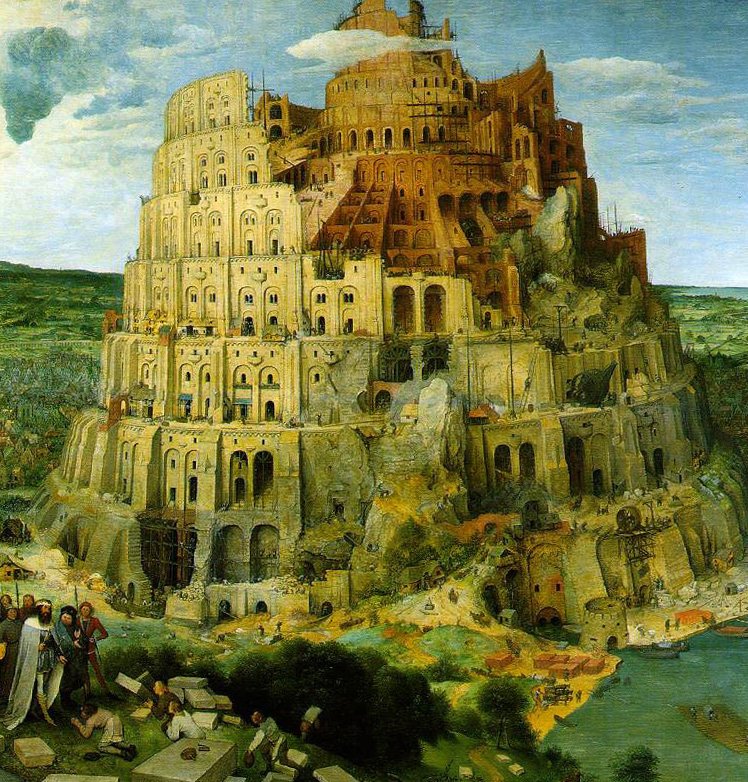
I believe the most important message of this encyclical lies in its response to the story that AI and digital technology try to tell us about human limitations and weaknesses. Magnifica Humanitas suggests that like modern architects of the Tower of Babel, AI theoreticians and engineers are often possessed of the hubris that they can build a tower to God and thus to immortality, omniscience, and omnipotence. But these prideful assertions are a denial of the finitude and contingency of human beings.
“We cannot consider AI to be morally neutral,” the pope explains. “In reality, every technical tool embodies choices and priorities through what it measures, ignores and optimizes, and how it classifies people and situations” (Section 104).
Therefore, he continues, “ethical discernment cannot be limited to asking whether we are using a system for good or bad purposes; it must also examine how that system is designed and what vision of the human person and society is embedded in the data and models that guide it” (104).
What is a person?
The most important consideration in any discussion of AI is the nature of the human person and, therefore, what things work toward the advancement and flourishing of the person.
Like Leo XIII in 1891, the answer to the question, “What is a human person?” is the guiding principle for all technological advancement and utilization. Rerum Novarum explained that the employer must “respect in every man his dignity as a person” (20). In my view, Leo XIV’s development of this idea in his discussion of “transhumanism” in Magnifica Humanitas is the most important contribution of the new encyclical.
“From the perspective of the Church’s Social Doctrine,” he writes, “the key issue is not the use of technology as such, but the vision that underlies it” (118). Is it the vision of Babel, in which we think we can overcome human finitude and contingency, but discard compassion, empathy, and vulnerability? Or is it a vision that recognizes the inherent contingency and finitude of human beings?
Finitude and contingency are not problems to be overcome, but realities to be embraced, says Leo XIV.

“It is precisely within our limitations” that we learn “compassion, as well as a sincere concern for the needs of others; a generosity that can emerge even in the midst of darkness and failure; spiritual experience and the worship of God” (119).
“Even when limitations are experienced as inner suffering, human wisdom teaches us not to deny or suppress it, but to integrate it” (120).
Echoing Jason Isbell, the pope writes: “To eliminate suffering entirely would mean, in the end, extinguishing love and desire as well” (120).
Thus does Leo XIV strike at the flawed presumption of AI and transhuman ideology: that finitude, dependence, and contingency are enemies to be overcome rather than gifts to be embraced.
“Finitude, when truly accepted, does not diminish us but opens us to recognizing the face of God and others,” he explains. It is precisely in our “experience limits — vulnerability, suffering, and failure — we can recognize the inviolable dignity of every person, both our own and that of others" (122).
Leo doesn’t deny the goodness of technology, including AI and other forms of digital technology. But these tools are not morally neutral. They are built by, and around, the moral choices of their designers. If the underlying ideology is one of “overcoming” the natural interdependency of human flourishing, it will produce human degradation.
While “it is right to strive to alleviate the suffering that marks human life” (118), such technology must be rooted in, and at the service of, the truth about the human person — limitations included.
“Humanity flourishes not despite limitations, but often through them,” Leo writes.
What is the essence of Leo’s wonderful encyclical, Magnifica Humanitas? The answer is the same as it was at Babel in Genesis 11: God is God and we are not Him.