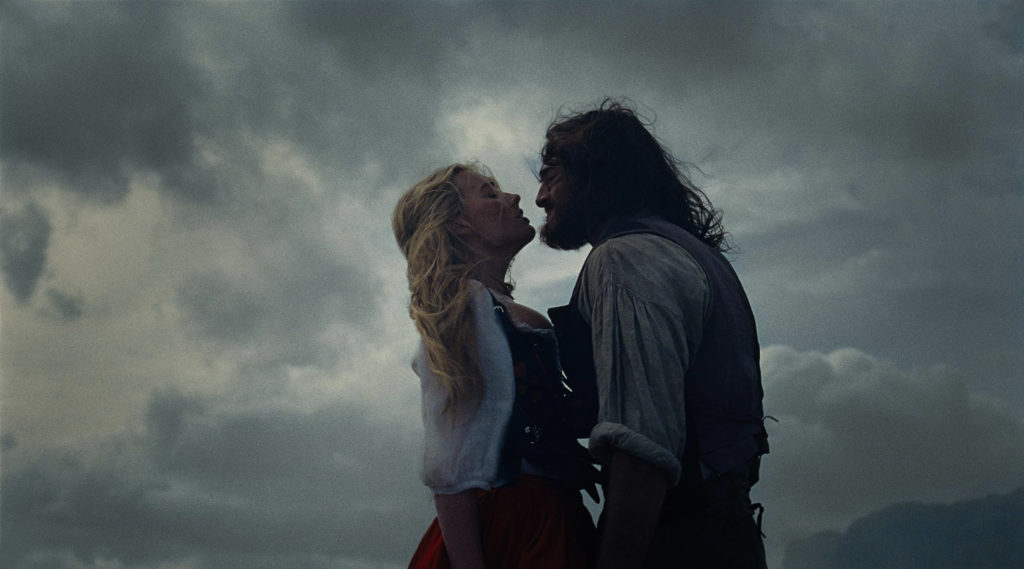
Somehow, I missed Emily Brontë’s “Wuthering Heights” when I was in high school, but I can’t say that I really felt that gap in my British Literature reading until now.
That is because, had I read the original novel, I don’t think I would have bothered going to see the new movie titled “Wuthering Heights.”
A tremendous box office success, the movie marks a new low point of popular culture.
The film is “based” on the 1847 novel (which I finally read) in the same way Monty Python’s “Life of Brian” is based on Scripture, and “travesty” is too anodyne a word to describe what director Emerald Fennell did to poor Emily Brontë’s creation. One reviewer said the author died 177 years ago, and the movie is the worst thing that ever happened to her. Meanwhile, USA Today’s review of the movie said that it “takes some liberties” with the novel but nevertheless “crafts a sumptuous bad romance that’s quite haughty, darkly hilarious, and ultimately heartfelt.” I think that meant he liked it.
One of those liberties is starting the show with a public hanging which occasions an anti-Catholic and lascivious slur directed at women religious. That late 18th-century Yorkshire would have a nun in the crowd witnessing the execution and responding to it sensuously is problematic history, but a good signal of the coarse imagination that is exhibited for the rest of the movie.
The reviewers who praised the movie hardly make a case for the crass excess of Emerald Fennell’s take on a classic story of love and obsession because they are part of the problem. David Sims in The Atlantic liked it although he also described it as a “gooey, grimy mess.”
“The camera lingers on dripping egg yolks and squishy bubbling dough; the protagonist, Cathy Earnshaw must wade through pig’s blood on her way to the moors near her home, leaving a trim of viscera on her gorgeously anachronistic dress. This is Fennell’s aesthetic throughout: loudly stylish on top and just as loudly nasty right below the surface.”
He’s ready for more, apparently.
A colleague of Sims must have begged to differ, because her take on the movie was that it illustrates Patrick Cosmos’ new unified theory of American reality, which is that everyone is 12 now. The director remembered reading “Wuthering Heights” and being moved by its romance when she was 14 years old. It was to recapture those feelings that she remade the movie as a sensuous extravaganza evidently inspired by soft porn books.
It is said that Brontë might have been inspired by Alexandre Dumas’ novel “The Count of Monte Cristo,” a long story of the revenge by a man whose love was taken away from him that was all the rage when she was writing “Wuthering Heights.” Like Dumas’ Edmond Dantes, Heathcliff loses his love to another man, becomes wealthy (although Brontë never tells us how) and plots revenge over years.
I think that the story has been misinterpreted as a romance. Catherine “Cathy” Earnshaw and Heathcliff are passionately and sometimes ambivalently involved with each other, but it is a selfish passion on both sides. Faced with the choice between poverty and comfort, Cathy rejects Heathcliff, who is poor, for Edgar Linton, a wealthy suitor about whom she can never be as passionate as she was with the vindictive egomaniac who was her first “love.” Frankenstein showed more humanity than Heathcliff. Rather than a romance, I would propose this is a tale of Eros gone terribly wrong. After the return of Heathcliff, Cathy loses control of herself just as her lover does. It is a folie a deux, two selfish people against the world and all for themselves.
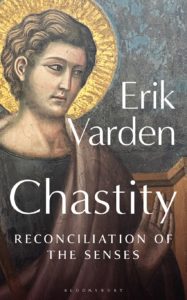
In a recent book titled “Chastity: Reconciliation of the Senses” (Bloomsbury, $17.60), Bishop Eric Varden of Trondheim, Norway, cites Pope Benedict XVI, who called erotic attraction a “kind of intoxication,” which can become “warped and destructive.” If Eros as a blind brute force is “absolutized,” it is stripped of its dignity and dehumanized, said Benedict.
There is no better description of the relationship between Cathy and Heathcliff. He is intoxicated with his relationship with her even beyond the grave, which he has no trouble disturbing to see her remains. His passion after her death fuels his cruel revenge on all the Earnshaws and Lintons. Vengeance has generational dimensions in Dumas, too, but Dantes is not an irredeemable villain like Heathcliff, whose malice extends to the vulnerable, even to his own son.
The movie skips a great deal of the novel, for which I suppose we should be grateful. There is some degree of ambiguity even in Brontë’s portrayal of Heathcliff. He has been called a Byronic hero and the passion of the two lovers, and is portrayed as a kind of force of nature. But the movie has no shades of characterization to make the two principals sympathetic. Anne Rice’s vampires were more sympathetic than the movie’s anti-hero, and Cathy’s narcissism is almost infinite. The director who idolizes the insatiable passion of the two seems to imply that Cathy’s servant and companion is really the guilty party in the downfall of the lovers.
What Varden writes in “Chastity” about Wagner’s opera “Tristan and Isolde” applies especially to the movie. Heathcliff clings to the corpse of Cathy as Isolde dove into the arms of dead Tristan. The destructive force of what is miscalled “love” is the true message of the opera, says Varden, although, “we must really pay attention to note the sickness of erotic inebriation in which there is no trace of romance.” This might be a criticism of the original, but the perverse “Wuthering Heights” out-Herods Herod, and with a lot more blood and guts.
The popularity of the movie speaks a great deal of the analytical powers of the typical audience. But it’s especially an index of the vulgarity of modern decadence. Vulgarity is having a good year at the box office. “Marty Supreme” is another example, for all of Chalamet’s notable virtuosity, but that is for another essay. I am ready to reread “Last Days of Pompei” to help my thinking about the corrupt imagination of our society. Do we need a Vesuvius?