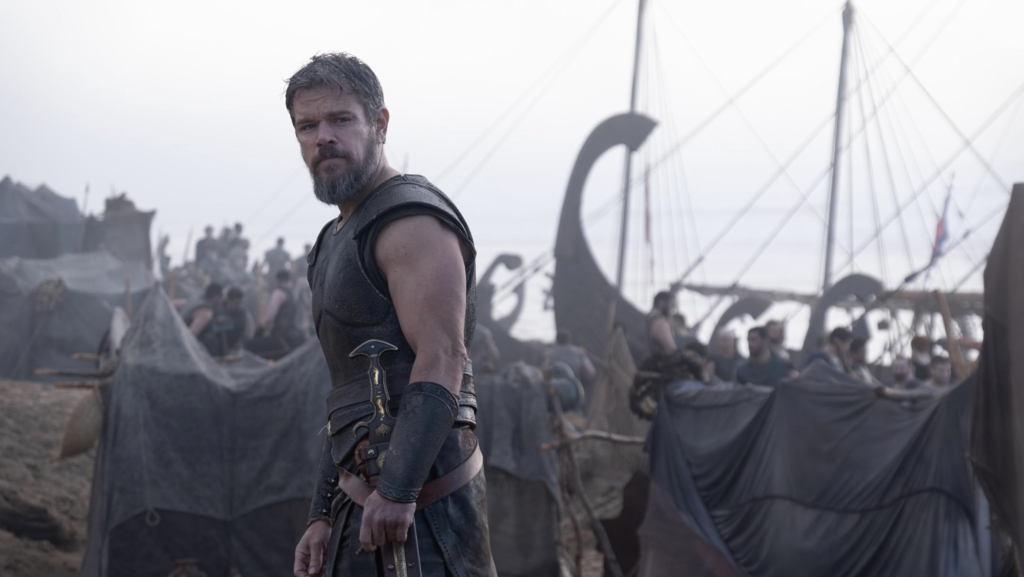
Walking into the movie theater, I was dreading a huge disappointment.
Homer’s “Odyssey” is one of the books I love most and have taught year after year. The Cyclops — the one-eyed giant who devours Odysseus’ companions — haunted my nightmares from the age of five. Christopher Nolan’s “The Odyssey” seemed almost destined to fail, and I did not want to hate him for butchering Homer as badly as “Troy” (2004) butchered the “Iliad.”
I was delighted to be wrong.
To all the friends who have been asking me if the movie is any good (as a classicist, they assume, I should know): The answer is yes.
“The Odyssey” is close enough to the original text to satisfy Homer fans. And it is driven by a strong, central set of questions which makes the plot relevant to contemporary audiences: What makes a civilization worth preserving? How can a dying world avoid being obliterated? What kind of hero does a world on the brink of destruction need?
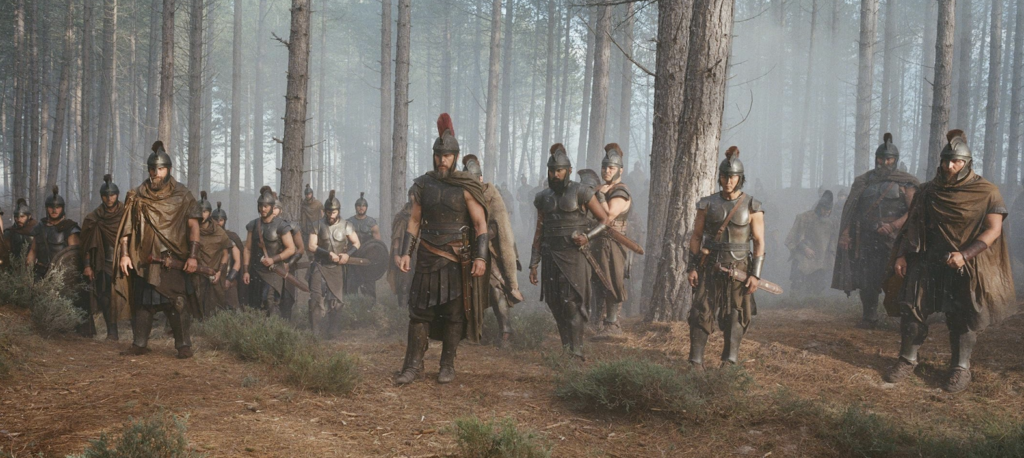
The answer to these questions is a film that is artistically and thematically consistent and can therefore stand on its own: not a story of wit and adventure, but a cautionary tale about power and the consequences of human ambition.
Nolan is careful to establish character and motivation. Themes and ideas are repeated enough to make it clear what the story is about.
Forget the polemic about costumes and race. Homer’s world only ever existed in the imagination of poets –– there isn’t an actual way Homer’s heroes were dressed. And Lupita Nyong’o is perfect as Helen.
And when Nolan departs from Homer, he remains faithful to the deeper logic of his adaptation. Circe, for example, is no longer the dangerously ambiguous enchantress of the poem but a woman brutalized by war who turns to magic as an instrument of revenge. The transformation of Odysseus’ comrades into animals becomes symbolic of the dehumanizing consequences of war.
The film’s underworld scene is remarkably faithful to the original. Odysseus travels to a land of darkness at the edge of the world where the spirits of the dead come up to meet him, just as in Homer’s account.
The encounter with the dead Agamemnon and the content of their dialogue are those of Homer, but the implications are in tune with Nolan’s central idea. In the “Odyssey,” the underworld is the hero’s ultimate challenge: to escape death and return home, Odysseus needs to plunge into death itself. For Nolan, the underworld is the place to confront the traumatic mistakes in the hero’s past in the form of the soldiers who lost their lives in the Trojan War and demand an accounting.
Homer’s original “Odyssey” is about a man who is kept alive by a stubborn love for the world. Homer’s tale begins with events in Ithaca, where Odysseus has been absent for almost 20 years. His wife Penelope is to remarry one of the many suitors who live in Odysseus’ palace and squander his goods, and his son Telemachus is too young to lead and claim the throne.
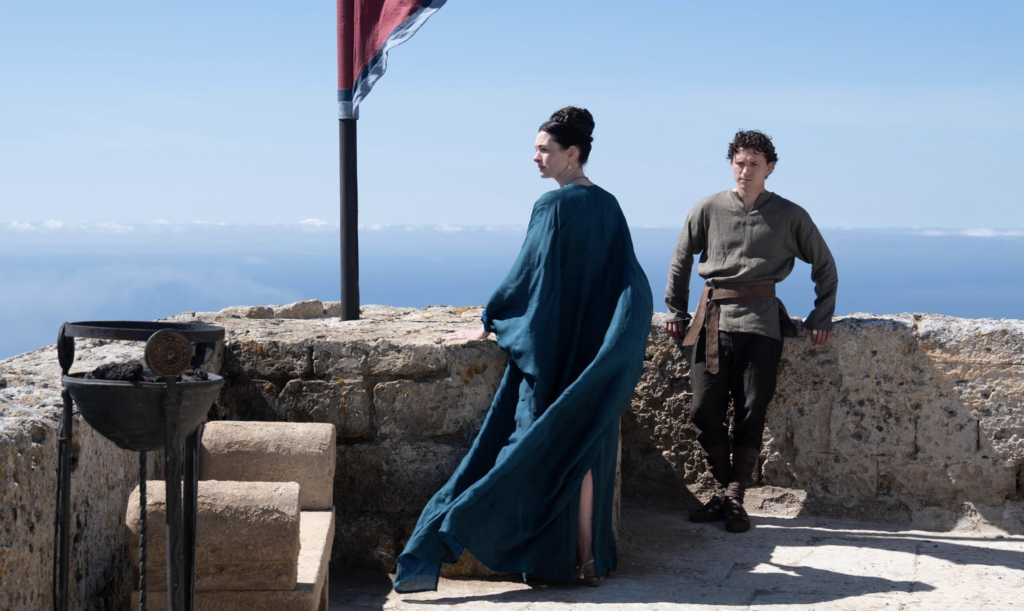
The action then shifts to Ogygia, a lost island where the goddess Calypso keeps Odysseus prisoner because she is infatuated with him –– she even promises him immortality. But Odysseus pines to return to his aging wife and strife-ridden city.
To do so, he needs to learn how to suffer, how to endure, how to forget everything he has learned and learn the world anew. He needs to die and be born again.
Nolan’s “Odyssey” takes a different approach. Calypso receives an Odysseus in distress, haunted by the trauma of war. She treats him with lotus, a forgetfulness-inducing narcotic (which Homer reserves to a different episode) until he is ready to cope with his past and accept the evil he and the other Greek leaders have committed.
This is the lesson Odysseus ultimately passes on to his son, Telemachus, who looks to him as a model of manhood and leadership. In Nolan’s “Odyssey,” fatherhood means accepting responsibility for one’s failures. There is a courage greater than seizing cities and facing monsters: it’s the courage to acknowledge one’s brokenness and the wrongs one has done.
Nolan preserves almost all the mythical monsters faced by Odysseus, yet the fantastic element is somewhat toned down, and the worldview is darker: the monsters outside become symbols of the monsters within.
The film makes little of Odysseus’ proverbial curiosity. There is none of the wonder and beauty of the world beyond, nothing of the sublime quest for truth and beauty embodied by Odysseus of Dante Alighieri, the great medieval (and deeply Christian) poet who left us an unforgettable version of the hero's final adventure in his "Inferno.”
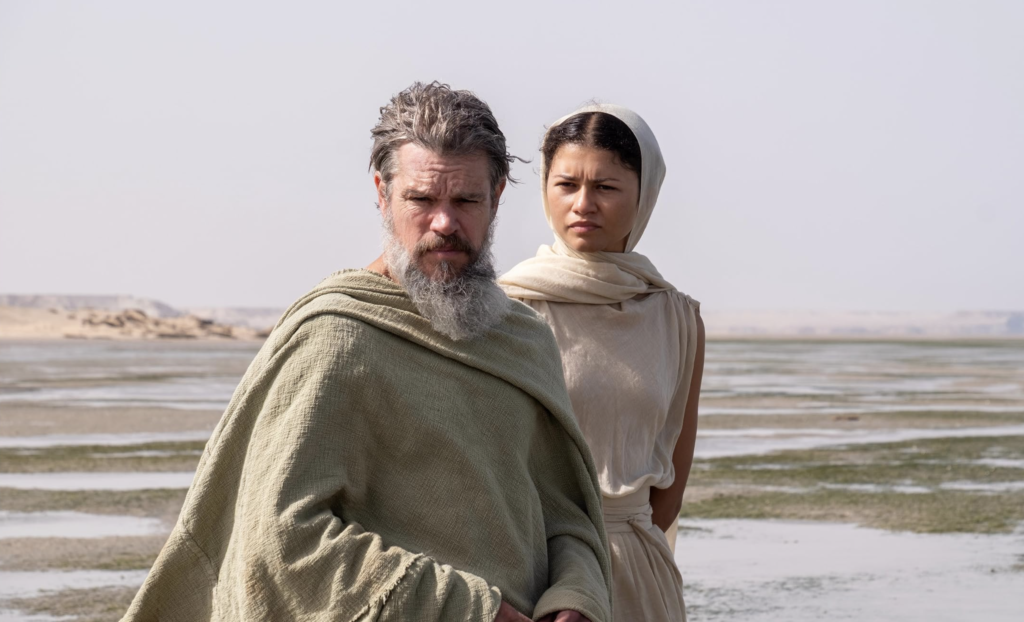
Of Homer’s gods, only Athena features in person, but never intervenes in the action. She is more of a counselor and messenger who conveys the will of Zeus.
But the Law of Zeus is ever-present, demanding that humans act civilly toward each other. This comes from Homer, but the purview of Zeus’ law is wider and more encompassing in Nolan’s. Failure to abide by it is the doom of Greek civilization.
Nolan’s “Odyssey” merges history and mythology to give Homer’s story a new twist. Nolan draws on a (now largely outdated) theory that both the city of Troy and the Greek civilization celebrated in Homer’s poems — what archaeologists call the Mycenaean civilization — collapsed under the assault of the mysterious Sea Peoples, ushering in a long Dark Age during which much of Greek culture was lost.
Throughout the film, characters refer to the imminent invasion of the Sea Peoples and the likely collapse of their world. Without giving too much away, Nolan links this looming catastrophe to the crimes the Greeks committed at Troy.
His approach reminded me of the way the Trojan War is depicted in Greek tragedy. In the 5th century BCE, Athens rose to lead Greece and built an empire. At this time, Greek tragedians reread the story of Troy as a cautionary tale about dominion. Agamemnon and his comrades conquered Troy and became the leading power in the world, but they crossed a line, incurring divine wrath that brought about the end of their civilization, the end of the Age of Heroes. Athens was meant to take heed.
This is what Nolan draws a parallel with today. Our civilization has failed and lost its values, above all the ability to preserve justice and mercy, and it is perhaps too late to change course.
In Nolan’s “Odyssey,” the greatest of Greek heroes returns home not to win another war, but to teach his son — and us — to learn from our wrongs and change course before it’s too late.