“I’m shocked, shocked,” says Captain Renault on closing Rick’s Café in the movie “Casablanca,” “to find out that gambling is going on here.” He is disingenuous about that, because he just had some winnings.
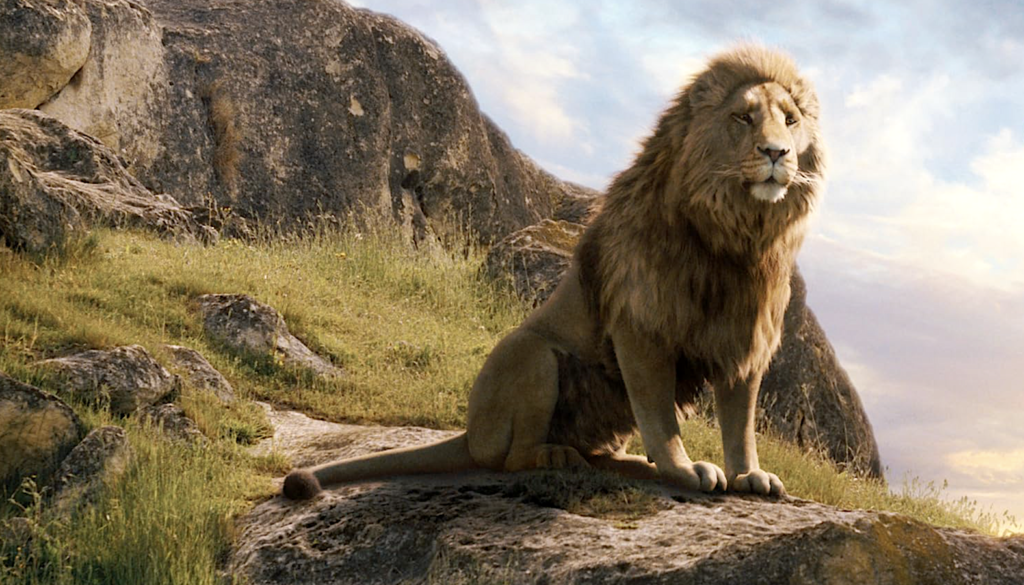
However, I am shocked (I hope not disingenuously) to hear that Meryl Streep will be the voice of Aslan in the upcoming Netflix production of “The Magician’s Nephew” (due in theaters in Feb. 2027), but it is naïve of me to be surprised that Netflix, hardly a paragon of Western civilization, is distorting a message so brazenly.
Aslan is a Christ figure in the “Chronicles of Narnia,” and the choice of an actress to do his voice is strange. Greta Gerwig, the creator of the movie, however, said in a 2018 interview that she found it “creepy” to talk about Jesus as your Lord and Savior. The woman said she attended church every Sunday but said, “It feels like this ‘God the Father’ thing is a bit alienating for me.”
Narnia supposedly is a world created by Aslan and corrupted by the intrusion of an evil witch, Jadis. This last would be a better role for Streep than the Christ figure, but maybe that was too creepy for the movie folk. One could ask, would they have picked Streep to voice over the Lion King’s father? As one commentator wrote, this is “a slap in the face of Lewis, but also a deliberate mockery of Christianity that is 100% intentional.”
Lewis was very clear that Aslan is a stand-in for Jesus in the Chronicles. To a mother who worried that her son’s obsession with Aslan was eclipsing his thoughts about Jesus, the author said her son “can’t really love Aslan more than Jesus, even if he feels that’s what he is doing. For the things he loves Aslan for doing or saying are simply the things Jesus really did and said. So that when Laurence thinks he is loving Aslan, he is really loving Jesus: and perhaps loving Him more than he ever did before.”
I admire C.S. Lewis’s books of essays on Christianity. As an essay writer, I think he is sometimes as good as G.K. Chesterton, which makes a very high standard. I enjoy the fiction Lewis has written, but don’t see it as important. Since seminary days, I have been around people who love Narnia very much. The other day in the bank, a teller noticed I was reading “The Magician’s Nephew” and gushed about how much she loved the Chronicles.
The books are charming, funny, and sometimes sly. However, I can resist the charms of Aslan because I think there is something funny going on about him.
He is obviously divine. In “The Magician’s Nephew,” he creates Narnia by a song echoed by some kind of stellar chorus. His power puts the magicians in the story to shame. But key elements of our understanding of Jesus are absent from Lewis’ presentation.
Aslan has no reference to God the Father. To capture the divinity of Jesus apart from the Trinity seems problematic to me. “God so loved the world that he sent His Son…” is missing from the story. I suppose you could argue that Aslan’s effect on others resembles the Holy Spirit, but that seems like stretching it to me.
Lewis seemed to indicate that Aslan was the way Jesus was incarnate in Narnia. An incarnation as a beautiful lion, with all the cubs in his image? If Jesus the Son is present on different worlds in different forms, that seems more like being an avatar than an incarnation. His warnings about what seem like Lewis’ ideas about nuclear armaments (the book was published in 1955). He warns Polly that, “it is not certain that some wicked one of your race will not find out a secret as evil as the Deplorable Word and use it to destroy all living things.” The Deplorable Word was the secret weapon with which Jaris destroyed the world of Charn. The warning does not sound like “I am with you always.”
Then he orders Polly and Diggory to destroy the rings made from the dust of Atlantis that produced the magic which led them to Narnia. He gives the boy an apple, which heals Diggory’s mother and the seeds grow into a tree that gives the best fruit in England, but without further healing powers. In Narnia, eventually, Aslan dies and rises again (spoiler alert), but where is the element of salvation?
So, Aslan is a Christ who “incarnates” in different shapes in different worlds, who has no Father in heaven, who sends no Holy Spirit, who promises no eternal salvation?
“The Magician’s Nephew” is an enjoyable fairy tale. There is a poignancy in the story of the boy’s sick mother because Lewis’ mother died while he was young. In the novel, the boy receives what Lewis did not from his prayers, which marked him for some time. Continuing the autobiographical note, Lewis tells us that Diggory became a professor, a “famous learned man,” like his author. We don’t hear what happened to Polly. The apple tree is chopped down, but the wood is used to make a wardrobe, famous later in “The Lion, the Witch and the Wardrobe,” the second novel of the Chronicles.
Greta Gerwig imagines “The Magician’s Nephew” as a “rock opera.” She was raised Unitarian Universalist but says David Bowie saved her life, as well as Paul McCartney and other popular stars. I suppose Christological considerations are not to the point here. Nemo dat quod non habet, as the Latin saying goes, “You cannot give what you do not have.”
But C. S. Lewis “habebat” or should have had it. That is why I am puzzled by the Aslan allegory. My apologies to all the Narnia fans. Just saying.