While down for the count with a summer cold that included a visit to the local urgent care facility, I had just enough energy to lie on my couch and manipulate a TV remote control.
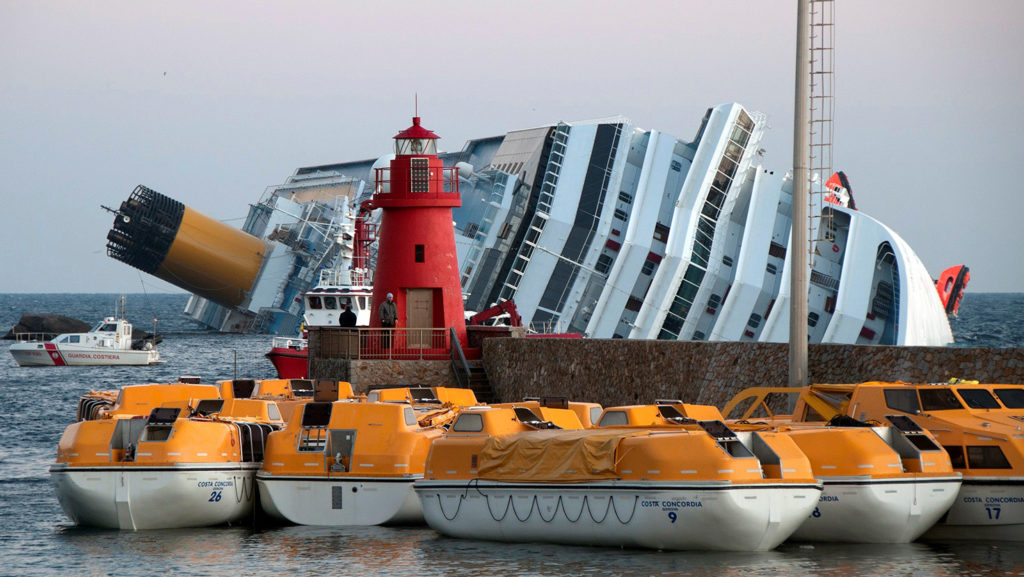
But there are only so many English murder-mystery shows you can watch, unless you are my wife. I needed something a little more real. I found it in the new Netflix documentary “Shipwrecked: Nightmare at Sea,” about the 2012 cruise ship Costa Concordia that hit the rocks off the coast of Italy, taking on all the aspects of a $150 million disaster movie epic.
For the passengers and crew of the Costa Concordia, it was no fiction but stark reality. The documentary is told by the real people who lived through that terrible night and who lost loved ones as well.
One can easily imagine a Hollywood scriptwriter writing a spec script about the catastrophe and one of those 22-year-old film school graduates whose uncle got them a job reading spec scripts at Paramount, summarizing the plot as: “It’s 'Titanic meets 'The Poseidon Adventure.' ”
But there was no Hollywood “ending” for more than 30 passengers on the ship who lost their lives. They were either trapped in the part of the ship that slipped under the waterline, or they drowned trying to reach the tantalizingly close shoreline in a turbulent sea.
The survivors’ accounts of the disaster are harrowing. A young family with their 18-month-old little girl, a young woman who was separated from her mother that night, and a crew member who was trapped underneath debris when the ship lurched to starboard are the “stars” of the documentary. Their lived experiences are augmented by archival Italian Coast Guard audio communications between shore and ship, real, not re-created video of the night of the disaster, and nautical experts who apply interesting layers of context and insights.
There was a general theme from these survivors that seems to be a universal component of our human nature and one that transcends race, culture, and everything else — namely, that we never think something catastrophic is going to happen to us, yet we are fascinated when they happen to others.
I think that is why something as awful as the Titanic sinking has grabbed the public imagination for so long.
Like that more famous 1912 disaster, the Costa Concordia had its own cast of heroes and villains. There was great bravery and determination, especially from the young husband and father trying to get his wife and daughter safely from the high end of the ship, where the lifeboats were malfunctioning, to the dangerous listing side of the ship, where the water was lapping over the railings.
There was abject cowardice from the ship’s captain, who just happened, by his own testimony, to “fall” into a lifeboat, and was heard in the film via official radio recordings from the Italian Coast Guard saying that he was supervising the rescue operation from the shore, while there were still hundreds of passengers on the ship he had abandoned. The captain’s criminal negligence was cemented by his refusal to tell the Italian Coast Guard the truth about his emergency, referring to it as merely an electrical “blackout” for more than an hour as the sea rushed into the gash in the side of the ship.
When I had finished this documentary, something bothered me. There was a “star” missing from everyone’s scenario. If any of the survivors mentioned God, it was not long enough to make an impression on me. I wonder how someone can go through an experience like this without reaching out for divine assistance or some act of spiritual comfort. I am sure that the more than 30 people who died probably had those moments, but sadly, they were not available for comment.
Maybe expecting the house band of the Costa Concordia to play “Nearer My God To Thee” on the ship’s listing deck is asking too much, but I guarantee you that if I were on a ship watching my captain direct “rescue” operations from the safety of the shore, I would be storming the gates of heaven for a little help down here.
It certainly worked for the apostles on the Sea of Galilee during the storm when they asked a not-so-concerned Jesus if he cared if they drowned. And St. Paul turned his own lived experience with a shipwreck into a massive teaching moment of faith.
After a little more reflection, the lack of God’s presence in the minds of these few survivors did not mirror the entire passenger list, so I am confident God was hearing from quite a few people that night. In the end, the message of this documentary is the same as the Titanic, or any other man-made disaster. As progressive and technically advanced as we like to think we are, at any moment, at any time, our trial may arrive.
The makers of this documentary had no intention of making a spiritual statement, but the story makes it for them. Our day may come like a thief in the night.