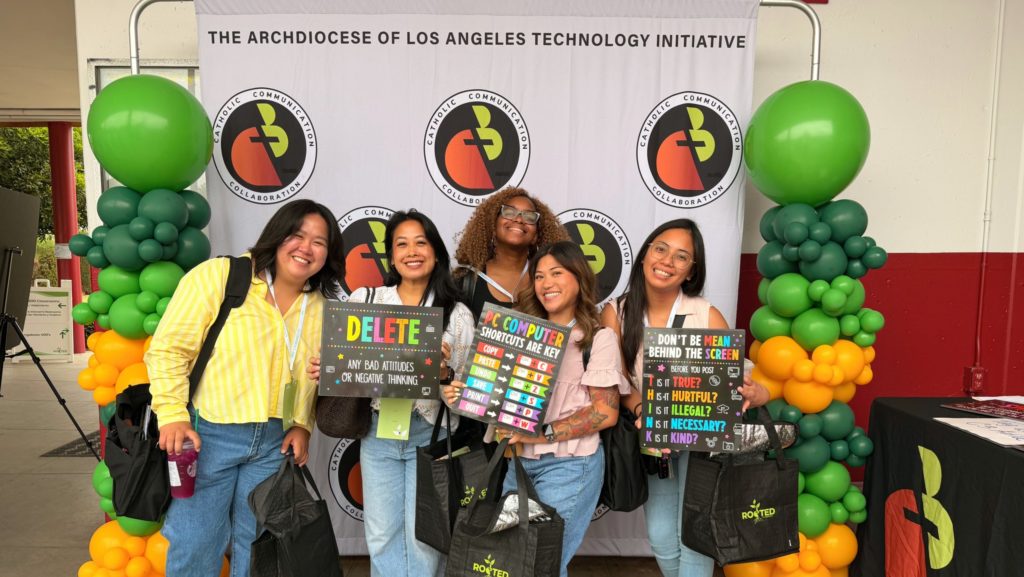
Participants at the 17th annual Catholic Communication Collaboration (C3) Conference were still riding a wave of momentum two months after the release of “Magnifica Humanitas” (“Magnificent Humanity”), Pope Leo XIV’s encyclical on safeguarding the human person in the time of artificial intelligence.
“The Vatican has just told 2 billion Catholics not to bury technology,” said conference keynote speaker Eric Cross, referencing the parable of the talents in the Gospel of Matthew.
“We woke up this morning in the middle of one of the biggest technology upheavals and came to this conference asking what we are rooted in. The successor to Peter just answered that question in two words: magnificent humanity. The treasure isn’t about the technology. The treasure is about you.”
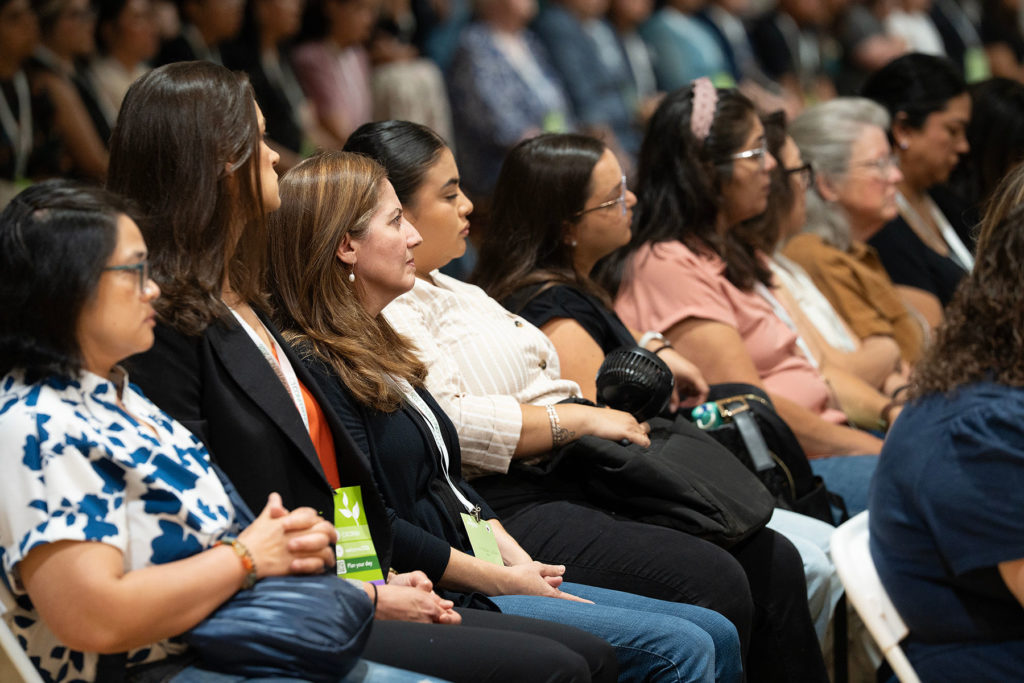
The landmark document shaped discussions at much of the conference, which drew more than 1,000 educators, students, parish administrators, catechists, and clergy from the Archdiocese of Los Angeles to the campus of Cantwell-Sacred Heart of Mary High School in Montebello Aug. 3-4.
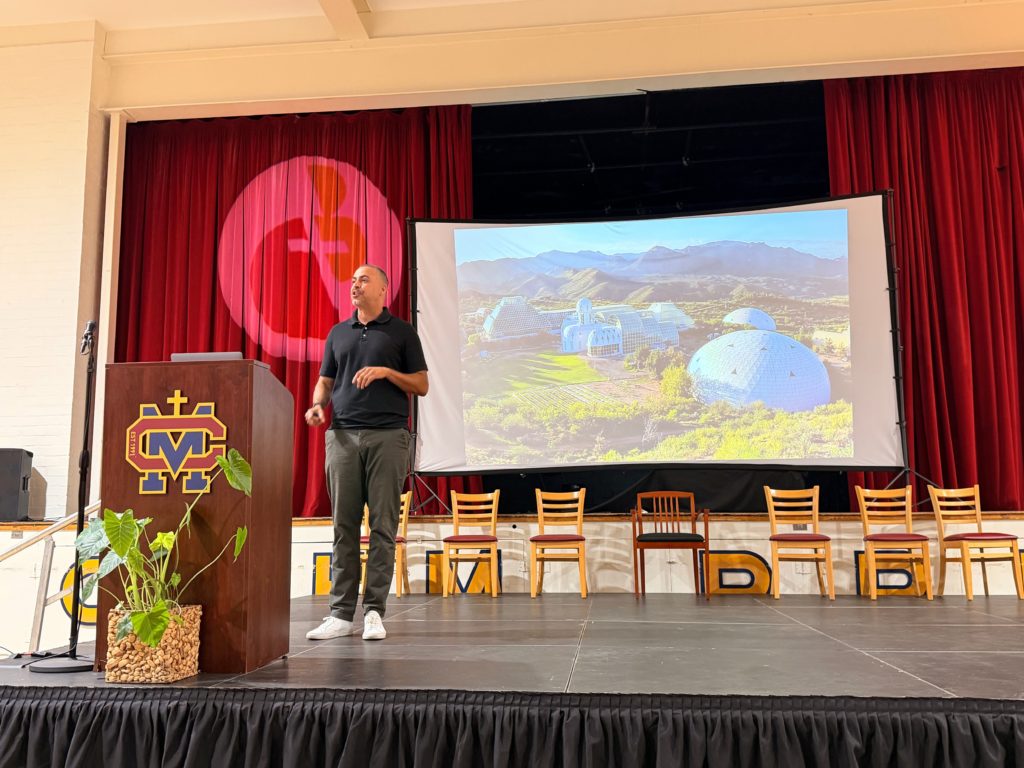
The conference’s theme this year was “Rooted,” which speakers invoked to argue that while technology remains a work in progress, it is also rooted in a very human emotion of uneasiness.
“I’m not a tech evangelist or a tech doomsayer,” said Cross, a professor at the University of San Diego and a STEM instructor at a public charter school. “I’m more curious instead of being scared. But I want to tell you it’s OK to have anxiety about all this. That’s not a character flaw. It’s evidence you care deeply about your vocation. People who don’t care don’t get anxious.”
Cross explained how Leo’s encyclical was a continuation of previous pivotal moments in the history of communications, all of which met some resistance. The invention of movable type with the Gutenberg Press in 1454 and the emergence of the Industrial Revolution in 1891 sparked a response from the Catholic Church to provide guide rails for engagement, rather than simply condemn it.
Coming from a nondenominational Christian background, Cross later told Angelus he was impressed that Leo had given a message that “speaks to an ache society has right now.”
“I don’t come from a place with a lot of formal doctrine, but the Catholic Church does,” Cross said. “I come here and see people happy and wanting to learn and help each other. Showing kindness. That gives people a shot at finding welcoming communities and seeking guidance on things like AI.”
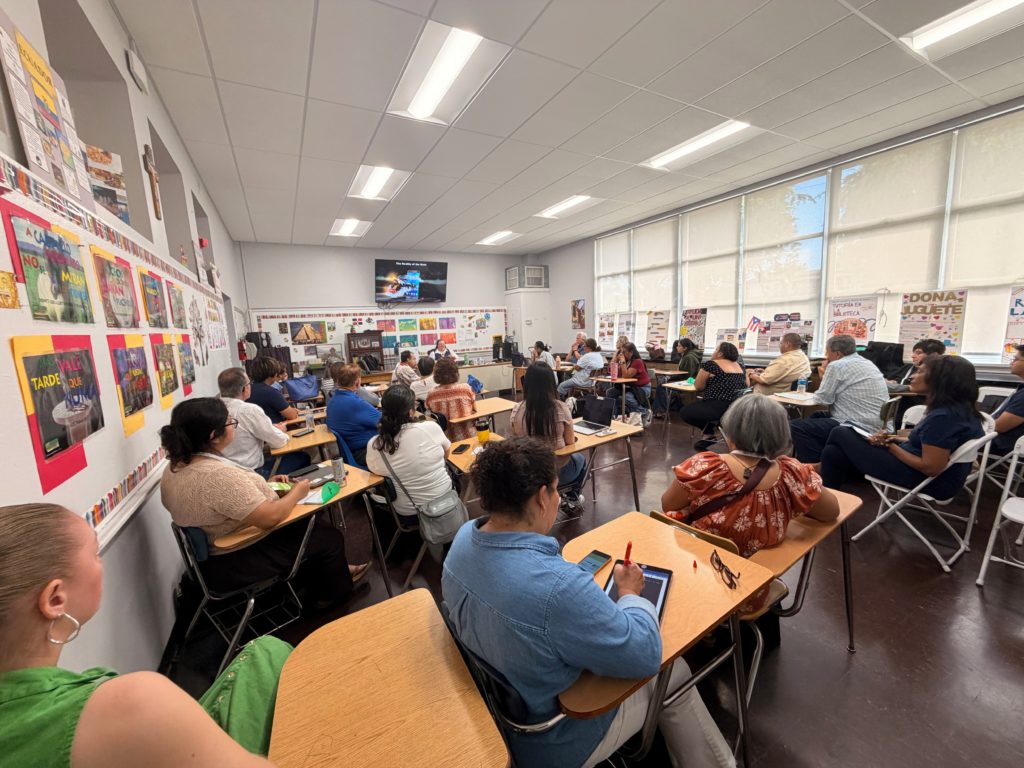
Digital natives and digital immigrants alike found interaction and idea sharing a critical element during the 120 presentations at the conference.
A discussion might start: Is Claude really better than Gemini or Google or ChatGPT or Grok? Another could follow: What does any of that mean, and do I need to know? Organizers said that was the point: to inspire the attendees to interact and educate among themselves, creating a network of support and information sharing.
That goal was reflected in the choice of honorees recognized for using technology in a more humanized manner.
Fabian Rodriguez, a sixth-grade STEM academy student at St. Louis of France Catholic School in La Puente, has been part of the C3 Thinker Tank Inventors program since first grade. He was honored for designing an app that baseball players could use to construct custom-made batting gloves.
Rodriguez’s app earned him a first-place finish last June in the Sports, Games and Toys category at the RTX Invention Convention U.S. Nationals in Michigan. His school was included with Maria Regina School in Gardena and Immaculate Conception School of Los Angeles as those recognized with the IGNITE Spirit of Excellence Awards.
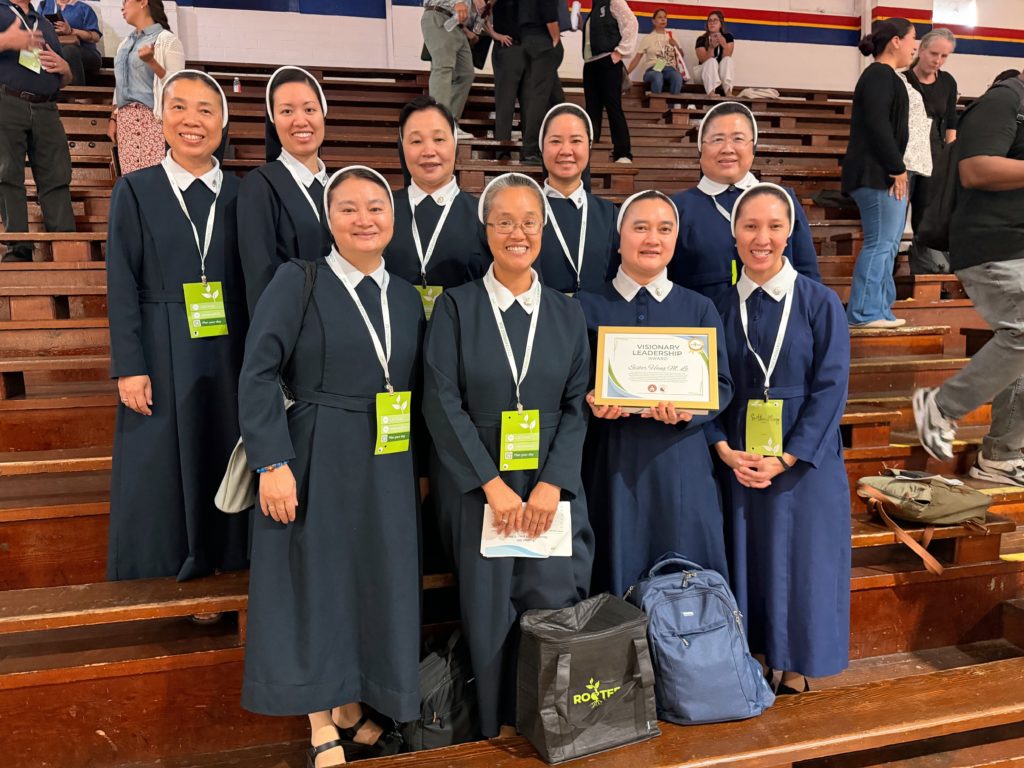
Before 30 catechists and eight principals were commissioned and blessed during a Mass by Archbishop José H. Gomez on Wednesday, Sister Minh Hang Le, the faith formation director for the Lovers of Holy Cross of Los Angeles, was presented with the Visionary Leadership Award by Dave Moore, the longtime technology expert for the archdiocese who received the inaugural honor last year.
“We have been able to connect our community with the outside world even with our old computers and laptops as we learn about the internet and all technologies,” said Hang, who also brought members of her community from the Diocese of Orange, numbering more than a dozen. “We have gone to C3 classes together to give us all more confidence — but today I’m going to the classes I want to attend so I can learn more and pass that on.”
During her welcoming remarks, Marge Graf pointed out that two previous C3 keynote speakers were key contributors to “Magnifica Humanitas”: Father Brendan McGuire, SJ, a Silicon Valley pastor and former tech executive; and Bishop Paul Tighe of the Vatican’s Dicastery for Culture and Education.
Graf is the general counsel for the archdiocese and known informally as the “Godmother of C3” for having harnessed the resources to launch C3 years ago.
“So you see,” said Graf proudly, “if you’ve been to C3, we have been ahead of the curve.”
In addition to “Magnifica Humanitas,” other pieces of magisterium found their way into workshops, too.
Wayne Bridges, in his presentation titled “A Practitioners’ Framework,” cited passages from Antiqua et Nova (“Ancient and New”), a note on the relationship between artificial intelligence and human intelligence the Vatican issued in January of 2025.
“AI should not be seen as an artificial form of human intelligence but as a product of it,” read a passage recited by Bridges and projected on the overhead screen during his session.
Another: “The physical presence of a teacher creates a relational dynamic that AI cannot replicate, one that deepens engagement and nurtures the student’s integral development.”
C3 participant Matthew Reyes, an incoming middle-school teacher at Christ the King Church near Hollywood, summarized his takeaway from Bridges’ presentation and the keynote:
“I think AI is like a welding torch to use — a tool that’s only as good as the people behind it. We can’t forget the human aspect of this — the roots are the humans who control AI. And AI is still something that needs a lot of practice and work.”