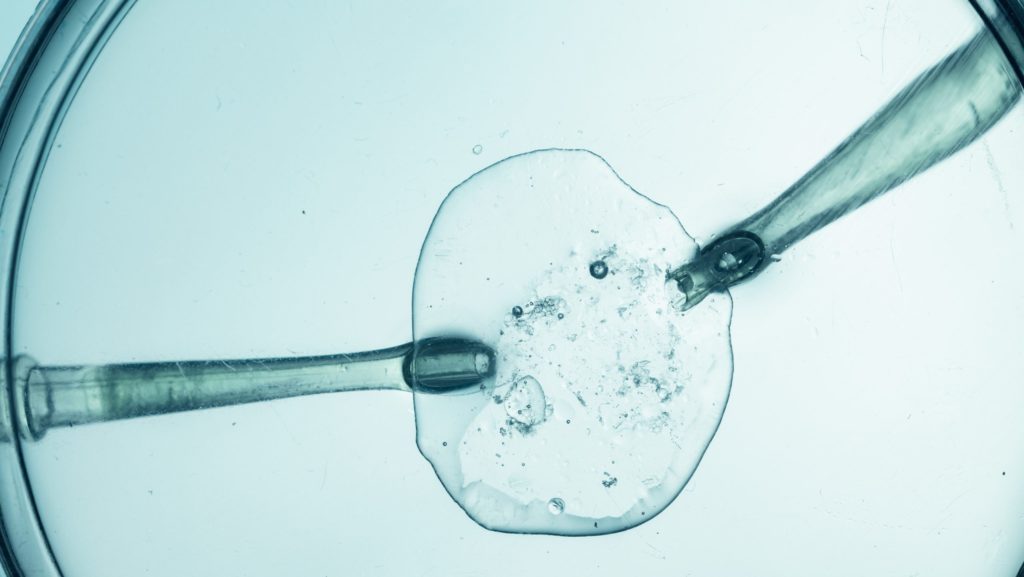
Genetic researchers are increasing the accuracy of gene editing through experiments on unborn babies that could have been done on animals, one bioethicist says.
At Columbia University, researchers have now edited the DNA of human embryos with “unprecedented accuracy,” according to a recent report by the New York Times.
Dieter Egli, a professor of developmental cell biology in the Department of Pediatrics at Columbia, led the research, using a technique called base editing to replace individual genetic letters in sequences of DNA, according to the report.
Egli’s work did not cause the damage that the gene editing technique “CRISPR,” or Clustered Regularly Interspaced Short Palindromic Repeats, usually causes. Potential side effects are still unknown, according to the researcher, and the technique is not ready to be implemented clinically.
The developing technology comes with its own ethical implications, as it could be used to help cure disease-causing mutations in the early stages of life, but it could also be used in a eugenic way to select traits of unborn children.
Father Tadeusz Pacholczyk, a neuroscientist and senior ethicist at the National Catholic Bioethics Center, drew attention to ethical concerns with these experiments.
“Trying to make genetic modifications in a more efficient manner than had been previously achieved is precisely the kind of experiment that should have been carried out in animal embryos, not human embryos,” he told EWTN News.
“The same basic biological information reported in these studies could readily have been obtained that way,” Pacholczyk said.
Ethical concerns with embryo experimentation
In addition to the unethical nature of the experiments themselves, Pacholczyk considered the way researchers obtained the unborn children to be unethical as well.
“Parents were asked to hand over their extremely young ‘leftover children’ in fertility clinics to allow scientists to carry out experiments on them, while other subjects of experimentation were created via IVF to be used as ‘research fodder,’” Pacholczyk said.
Scientists either got the embryos from parents who had “leftover children” or created the human embryos for experimentation — both of which Pacholczyk said the Church calls unethical.
“Researchers sought out eggs from women for the purpose of fertilizing those eggs to create embryonic humans in glassware, so they could then serve as raw materials for research and experimentation,” Pacholczyk said. “From the get-go, these experiments at Columbia University were unethical.”
“Also of note, the human embryos produced in these experiments were oftentimes intentionally sacrificed to obtain their embryonic stem cells, which were used for additional research,” Pacholczyk continued.
“Creating humans for the purpose of destroying them is invariably unethical and should be illegal,” he continued.
Some embryos were obtained from parents who created children through in vitro fertilization (IVF), which Pacholczyk said neglects the consent of the unborn human being.
Parents could not give consent for their unborn children to be experimented on, he said, because “ethical consent by definition focuses on the improvement of health and excludes any approval of directly causing their death or otherwise using subjects as mere means to an end.”
“Informed consent is particularly important when dealing with very vulnerable research subjects, and human embryos are among the most vulnerable of God’s creatures,” Pacholczyk said. “Human embryos are a special class of individuals deserving of special protections.”
Looking to the future: Ethical concerns of gene editing
Pacholczyk noted that the Catholic Church would support gene editing as medical therapy but not at the risk of the unborn child.
“It is important to note that the Church would allow for gene editing to fix genetic abnormalities, as long as the risks were very low for the embryonic patient, and heritable changes to the DNA of our species were not made,” Pacholczyk said. “Such repair is simply a form of direct medical therapy for the individual.”
He noted, however, that at this point, gene editing still poses huge risks to the unborn.
“The complex science of genetic modification at this point in time still involves enormous risks to the embryo,” he said.
Pacholczyk also raised concerns about Catholics' acceptance of genetic enhancement, warning that their widespread acceptance of IVF is a harbinger of things to come.
“Catholics need to be concerned about the prospects of genetically modifying future generations,” Pacholczyk said.
“In the past, Catholics seem to have largely missed the boat when it came to recognizing and articulating the moral unacceptability of creating children in test tubes and glassware via IVF, and now Catholics participate in such technologies at rates that probably donʼt differ much from the general population,” he continued.
“Similarly, when genetic enhancement of children takes place in the future, considering the widespread lack of understanding and serious reflection on the moral and ethical issues involved, Catholics are likely to end up being swayed by the technological temptation and may end up, once again, ‘going along to get along,’” he said.