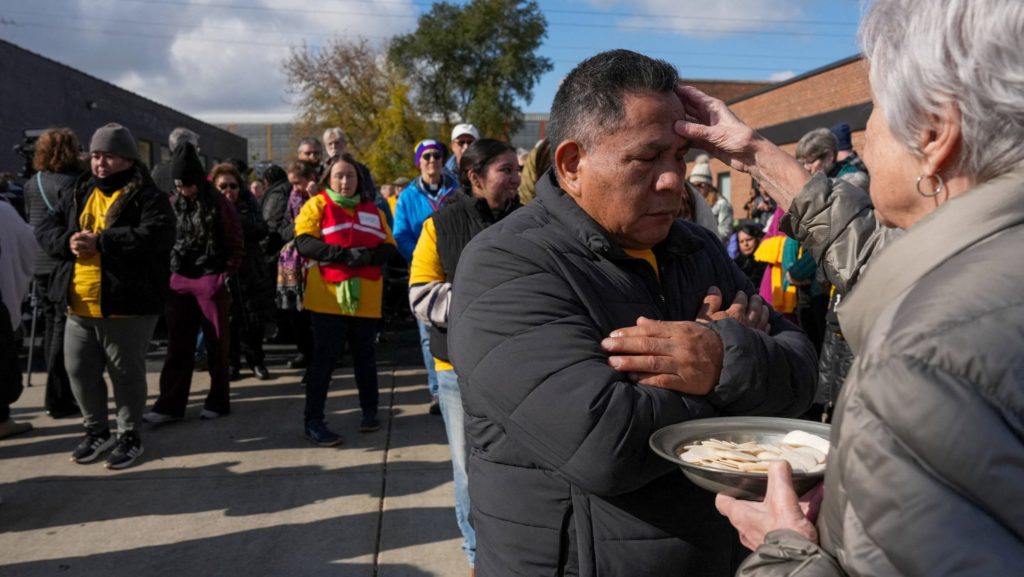
Clergy and religious have begun ministering regularly to those being held at an Immigration and Customs Enforcement facility in suburban Chicago -- for now -- after almost a year of trying to have regular visits.
The Chicago-based Coalition for Spiritual and Public Leadership called the pastoral visits "unprecedented" in its May 19 announcement about a court-ordered agreement being carried out.
Groups from CSPL started going daily to the ICE processing facility in Broadview May 15, following a federal judge's preliminary injunction in April. Prior to the May 14 agreement, the regular pastoral visits had only occurred weekly.
The temporary order prohibited the Department of Homeland Security from imposing a total ban on pastoral visits at the facility 12.5 miles west of downtown Chicago, while CSPL's lawsuit seeking permanent regular pastoral visits is pending. It also compelled DHS and ICE to permit the visits and work out with CSPL terms for the visits.
Michael Okinczyc-Cruz, CSPL executive director, told OSV News, since May 15 at least three and sometimes as many as five ministers have entered the facility.
CSPL, a Catholic social justice organization, has welcomed ecumenical and interreligious groups to also minister to those at Broadview. According to Okinczyk-Cruz, several of their members joined the Catholics and have entered.
He described the visits as "very meaningful" for those detained and said the May 17 visit included anointing for several men, one of whom said in Spanish that he felt like he had "come alive again" after receiving the anointing oil.
"The power of the spiritual accompaniment in this pastoral care, it's not to say that it solves every single challenge or problem here," explained Okinczyk-Cruz. "But we cannot underestimate how profoundly vital it is for our immigrant siblings to be accompanied during these moments of profound trauma and fear and separation."
He said the people being processed with "fear in their eyes and sadness in their voice" are often separated from their children, siblings and loved ones "whose lives have been completely upended and torn apart," as described by the ministers who have been inside.
Of the migrants most at risk of arrest and deportation by ICE, about 80% are Christian -- the majority of whom (61%) are Catholic, according to a joint Catholic-evangelical report published by World Relief and the U.S. Conference of Catholic Bishops.
CSPL sued the Trump administration in November demanding access to the facility, claiming its members' religious freedom rights had been violated. It also argued weekly pastoral visits to the facility were allowed for more than a decade prior to the Trump administration's ramped-up immigration crackdown in the Chicago area that started in September 2025.
U.S. District Judge Robert W. Gettleman said in the April 7 preliminary injunction the plaintiffs demonstrated the "likelihood of success on the merits of their" religious freedom claim.
He wrote in the order, "Defendants are directed to allow plaintiffs to access the Broadview facility on each day of the pendency of this litigation to offer services for those who desire them."
The order also directed the parties of the lawsuit to meet and come up with guidelines for the visits.
According to the agreed-upon protocols submitted to a federal magistrate judge in Chicago May 14, groups of no more than five can enter once per day for three-hour blocks in the morning or afternoon with a requirement of 24-hour prior notice and proper identification to be submitted to ICE.
Okinczyk-Cruz said there's a "profound need" for the ministry and also highlighted the protocol item that allowed for one-on-one ministry, that some detainees were given. The agreement says, "ICE will make reasonable efforts to afford a degree of privacy for pastoral communications, including confession or counseling, consistent with security protocols and facility operations."
"To my mind, it's emergency room treatment. Someone is there right when the trauma has happened to attend to the immediate emotional and spiritual wounds," said Claretian Father Paul Keller in a May 19 news release about the first visit since the preliminary injunction took effect.
Father Keller, superior of the Claretians' USA and Canada province, had previously ministered to those at the facility on Ash Wednesday, which was Feb. 18, and one of the three days of the Easter Triduum. Both instances were also facilitated through temporary court orders from Judge Gettleman.
In his March 31 partial injunction that compelled the Easter Triduum visits, Gettleman wrote, "The court finds that the government has substantially burdened plaintiffs' exercise of religion."
The next status hearing on the case is July 7.