The utility bills keep going up, the washing machine is breaking down, and every night someone sleeps on the couch.
That’s what happens when your household instantly doubles.
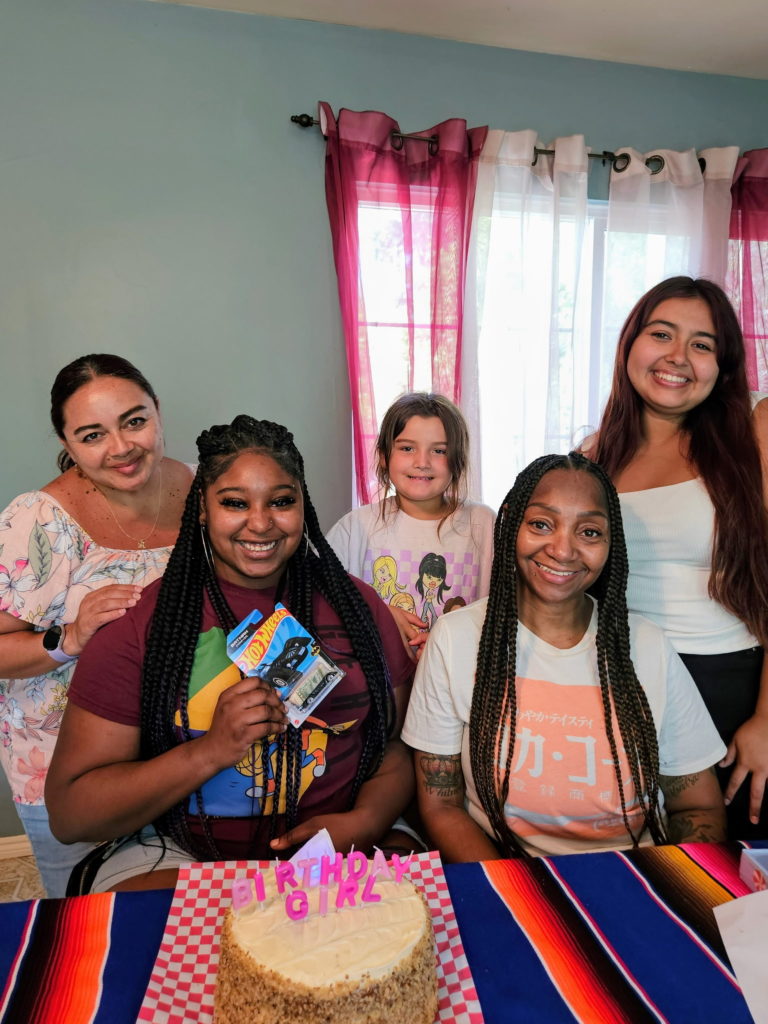
With nothing more than a generous heart, Ramona Villegas welcomed in a co-worker and her three daughters after they lost their Altadena home in the Southern California wildfires in 2025. After more than a year of financial strain, Villegas just received her first monthly stipend from Catholic Charities, which, along with the Red Cross, is providing much-needed funds to lighten the load for those like Villegas who have taken in wildfire survivors.
“It’s going to help a lot. I’m so relieved,” said Villegas, who lives in Pasadena. “We did have to make a lot of accommodations, but I was very blessed to be so close to the fire and have my house still standing. I couldn’t say ‘Well I’m good’ and turn my back on others who weren’t.”
The Disaster Aid for Host Families program is just one of several Catholic-run relief resources still operating even as the wildfires have faded from the headlines. Catholic organizations across the Archdiocese of Los Angeles and beyond say their support is more needed than ever as other relief sources begin to dwindle.
“People are surprised that we’re still around because a lot of agencies have left already,” said Nicole Ybarra, associate program director for Catholic Charities of Los Angeles’ (CCLA) San Gabriel region.
Ybarra’s team has visited parishes and even posted flyers in coffee shops in affected neighborhoods.
“It’s hard to find these resources, so when they find us, people are very grateful.”
For its disaster relief programs, CCLA received more than $2 million from its national organization, along with donations from individuals, parish collections, and the Catholic Community Foundation of Los Angeles. While CCLA is the LA Archdiocese’s primary relief organization, lay orders also provide aid to wildfire victims.
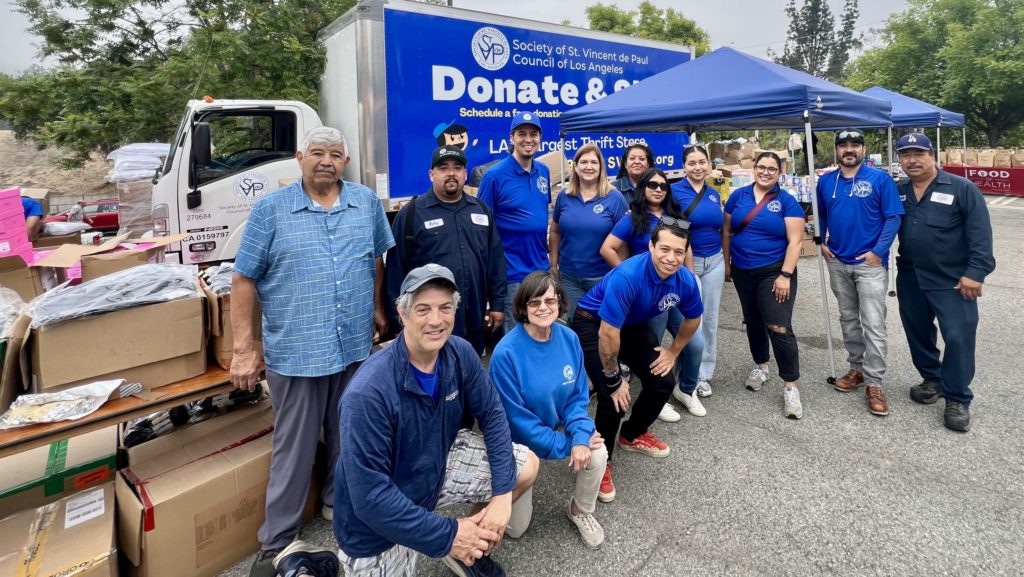
One of the most active parish-based groups is the Society of St. Vincent de Paul (SVdP). Guided by a belief in “person-to-person service,” the organization initially supplied fire victims with basics such as food, clothing, and pastoral care. They now do home visitations to assess needs firsthand, then assist accordingly.
“I think more than anything, it’s helping with rent because they’re working less,” said Dave de Csepel, president of SVdP’s St. Elizabeth of Hungary Catholic Church Conference. “When you have [thousands] of structures burned down, whether it’s a country club, a restaurant, or even a home, a lot of jobs go away too.
“People are squeezing into smaller apartments or just living in their cars.”
Felisa Wright of Altadena was devastated when the Eaton Fire destroyed her home, which was also the site of her private daycare business. Wright says SVdP covered several months of her rent and utilities, enabling her to relaunch the business at a new location.
“St. Vincent came through; they helped me tremendously,” Wright said. “Once I am making income like how it used to be, I want to give back and donate to the charity so that they can help someone else.”
To date, SVdP has raised $950,000 for wildfire victims, thanks in large part to contributions from the Annenberg Foundation and the Pasadena Community Foundation. Additionally, SVdP, the Knights of Columbus, parish priests, and staff helped connect victims to assistance from the Orange Catholic Foundation.
The latter, with donations from the Diocese of Orange and its parishioners, raised $1.2 million for its Help LA Fund. Fire victims, regardless of religious affiliation, applied for assistance at eight locations, including Sacred Heart and St. Elizabeth churches, both in hard-hit Altadena. Individual grants ranged from $300 to $2,500.
According to Orange Catholic Foundation Executive Vice President Kathleen Hurtt, Catholics from around the country pitched in.
“I think this is the beauty of the Church, when a part of us hurts, all parts hurt,” Hurtt said. “And being a tourist destination, we can expose people in a unique way to what the Church can be. Visitors to our parishes were so inspired by the fact that we created this fund … [and they] stepped forward.”
Grant recipients, like the Neiman family of Pacific Palisades, said that generosity provided not only material goods, but a little healing and hope.
When the Palisades Fire tore through the community, it took nearly everything the family held dear: their children’s schools, their parish, Corpus Christi, and their home filled with essential medical supplies for their daughter.
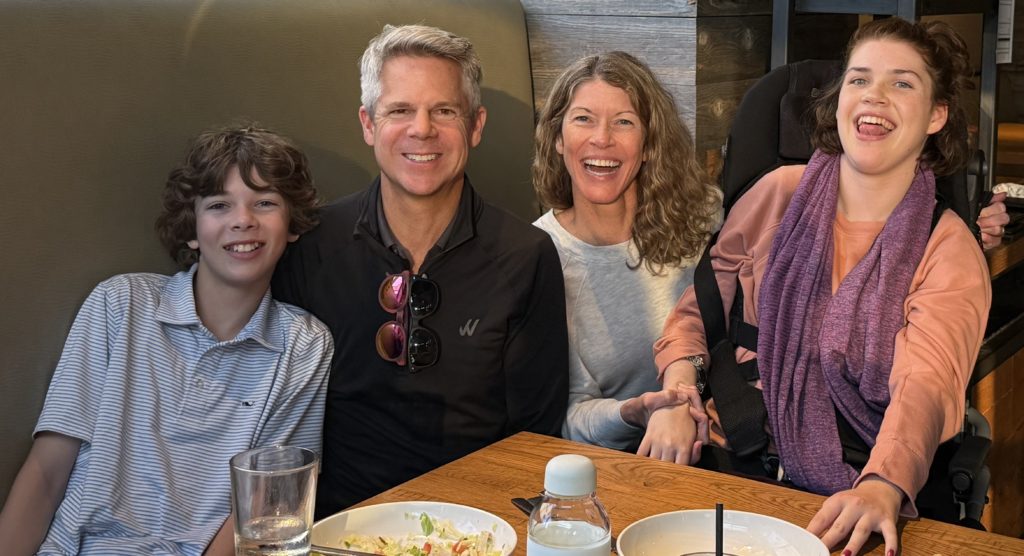
Ciaran, who lost much of her mobility following a near-fatal infection, relies on speciality equipment like a lift and a rolling bathing chair. Her mother, Shannon, said all that was left after the fire were the charred remnants of a wheelchair and a sense of sadness.
That changed when the grant money came through. The first thing she did was buy a custom bed that allows Ciaran to comfortably sit up and eat.
“That’s my daughter’s safe, happy place,” Shannon said. “So to financially help us with a piece of equipment that we would not actually be able to afford was amazing.
“Any dose of joy helps us take one more step forward.”
As some Catholic groups tackle the many needs of wildfire victims, others have a singular focus. For the Order of Malta in Los Angeles, it’s the well-being of children, particularly displaced students from the schools that were forced to close at Corpus Christi and St. Elizabeth parishes. Members raised $100,000 in scholarship funds, allowing more than 90 students to continue their education at neighboring Catholic schools.
Assumption of the Blessed Virgin Mary School in Pasadena welcomed 67 displaced students, the majority from St. Elizabeth, with tuition assistance coming from the Order of Malta and additional donors like the archdiocese, Christ Child Society of Pasadena, and Catholic Charities.
Assumption Principal Robert Bringas Jr. said the influx of students altered the school’s character in a positive way.
“Absolutely [we changed] for the better,” Bringas said. “More students, more diversity, more awesome personalities. I think these families have been a blessing.”
Rowena Itchon, leader of the Order of Malta’s Los Angeles region, said providing aid during disasters, especially to the underprivileged, is central to its mission.
“In the Order, we call the sick and the poor our Lords,” Itchon said. “By serving them, we see God, we see Christ and this is the heart of our work.”
Yet relief work remains challenging, sometimes even gut-wrenching, especially when struggling fire victims receive another blow. De Csepel points to the fear created by the ICE deportations of undocumented immigrants.
“These are the hardest working families, with so much pride, and then they come to us because they can’t go do their jobs,” de Csepel said. “They’re just afraid. And sadly enough, even students … are afraid of coming home and finding their parents gone. It’s hard, but we try to help because they really are the fabric of our community.”
Driving an Uber car through the streets of Pasadena, Osvaldo Cosio sees the region in recovery with large new homes being built next to burned-out lots. Cosio said he’s hoping his life returns to normal after losing his home and day job to the flames. He’s surviving on temp work and Uber driving, but it almost fell apart.
“If I couldn’t make this car payment, they were going to take my car and then I was really going to be in trouble,” said Cosio, a father of two. “So Dave [de Csepel] helped me make my payment. He’s helped me out again with rent and food.
“[Volunteers] opened their arms as if they were friends and family.”
The Catholic organizations say they’re in it until the work is done, motivated by their clients and their Catholic beliefs.
“I want to be there for them as long as we have money and until, really, the community comes back,” Ybarra said. “I believe in social justice 100%, and this work that I do is divine because of my faith.”