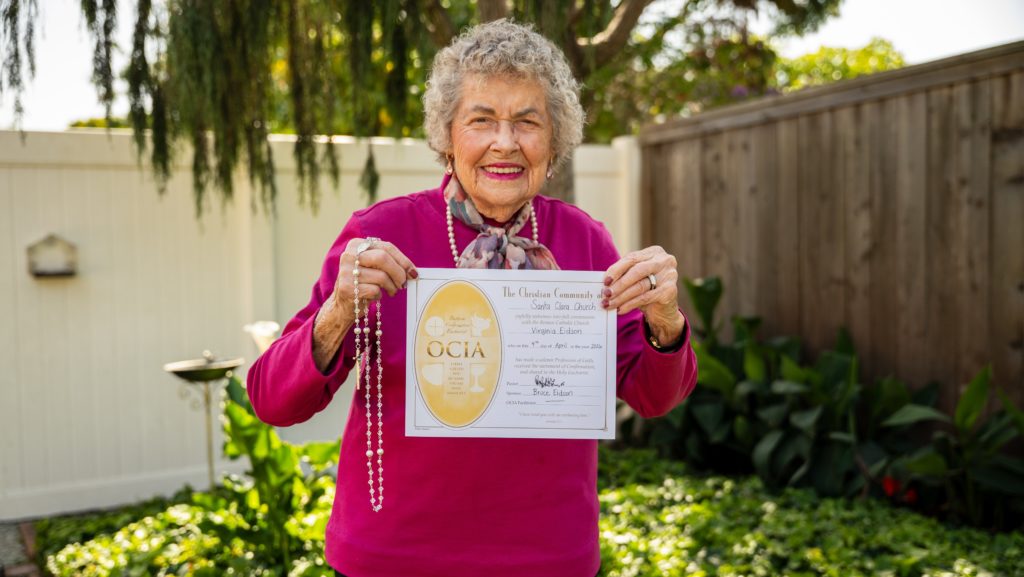
As she approached her 98th birthday, Virginia Eidson was more concerned about her next life than her present one. It weighed on her that she had never been baptized.
Born into a Cherokee, Choctaw, and Irish family in Oklahoma, her family was nominally Baptist but often too busy working to get to church. When she was about 13 and the Dust Bowl had destroyed their farmland, her stepfather packed their mother and nine children into the car and headed to California.
“The others were all baptized, but not me. Somehow it never worked out,” she said.
That changed at the Easter Vigil in Oxnard’s Santa Clara Church, where Virginia Eidson was by far the eldest of those who became Catholic this year.
Her 77-year-old son, Bruce, sponsored her.
For the pastor, Father John Love, it was a reminder of the spiritual vitality of elders. “Elderly people can convert and come to the living waters,” he said.
Although Bruce Eidson is a longtime active member of the parish, Love had never heard the family history until Virginia Eidson asked for baptism.
In 1838, the U.S. government used military force to remove five great tribes from their land in the southeast so white settlers could take their land. Indigenous people of all ages were sent on a forced march to Oklahoma, with thousands dying along the way. Eidson’s Choctaw and Irish grandparents brought their newborn son, her father. She never heard the stories directly from him because he died when she was a toddler.
Her mother was Cherokee. The family farmed large tracts of land in Pittsburg County, Oklahoma, that her grandfather had obtained for his seven daughters and one son. But in the 1930s, in the middle of the Great Depression, severe drought turned the winds of the plains into apocalyptic dust storms that destroyed fields.
Farming became impossible. Her mother had remarried and her stepfather worked for the Works Progress Administration (WPA), a “New Deal” program that President Franklin D. Roosevelt created to put unemployed people to work. Her stepfather was building roads for the WPA when her uncle came back from California saying that good jobs were plentiful there. When Eidson was about 12 the family of 11 crammed into a car and drove to Pixley, Tulare County, to look for work.
When her stepfather went into the office, the men took a look at the car and told him they would only hire him if his children also worked the fields.
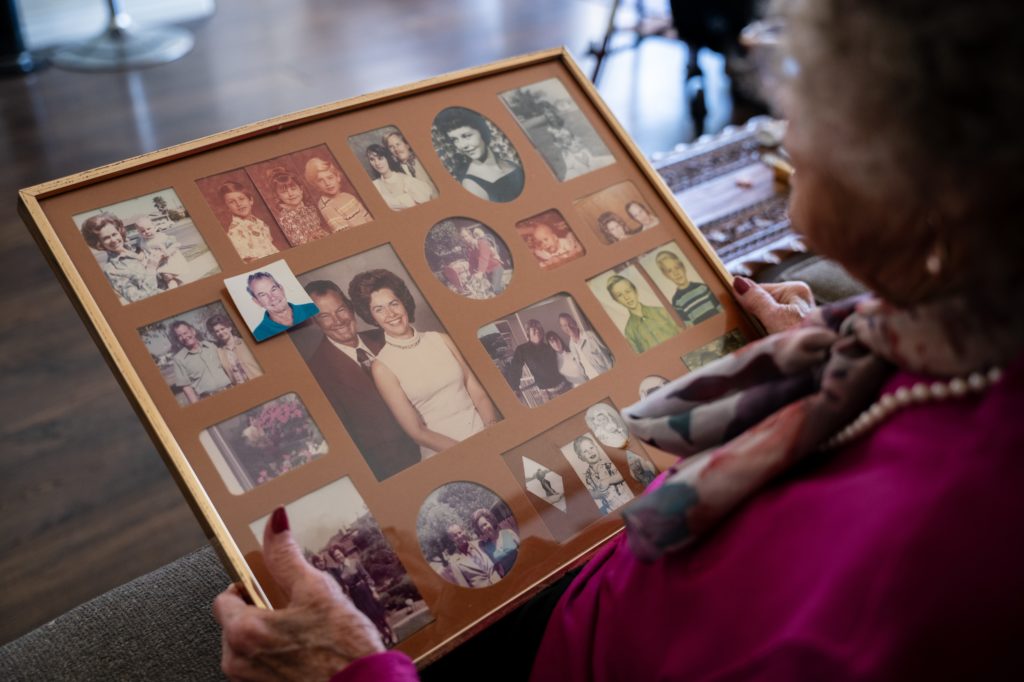
“My stepfather said, ‘No, my kids are not going to work,’ ” she said. He left and drove on, eventually landing a job in the oil fields at Bakersfield. She grew up there, marrying Edward Eidson, a Kern County sheriff’s deputy.
Choctaw and Cherokee traditions are important to her and she subscribed to tribal magazines. She sometimes traveled back to Oklahoma. Bruce Eidson met her maternal grandmother, then a very elderly woman in a rocking chair, when he was small.
“She had all these stories about the wagon trains that kept coming through and hunting on their land,” he said. “She gave me a completely different outlook. I used to see cowboy and Indian movies. Now I saw that there was a completely opposite perspective about the white settlers.”
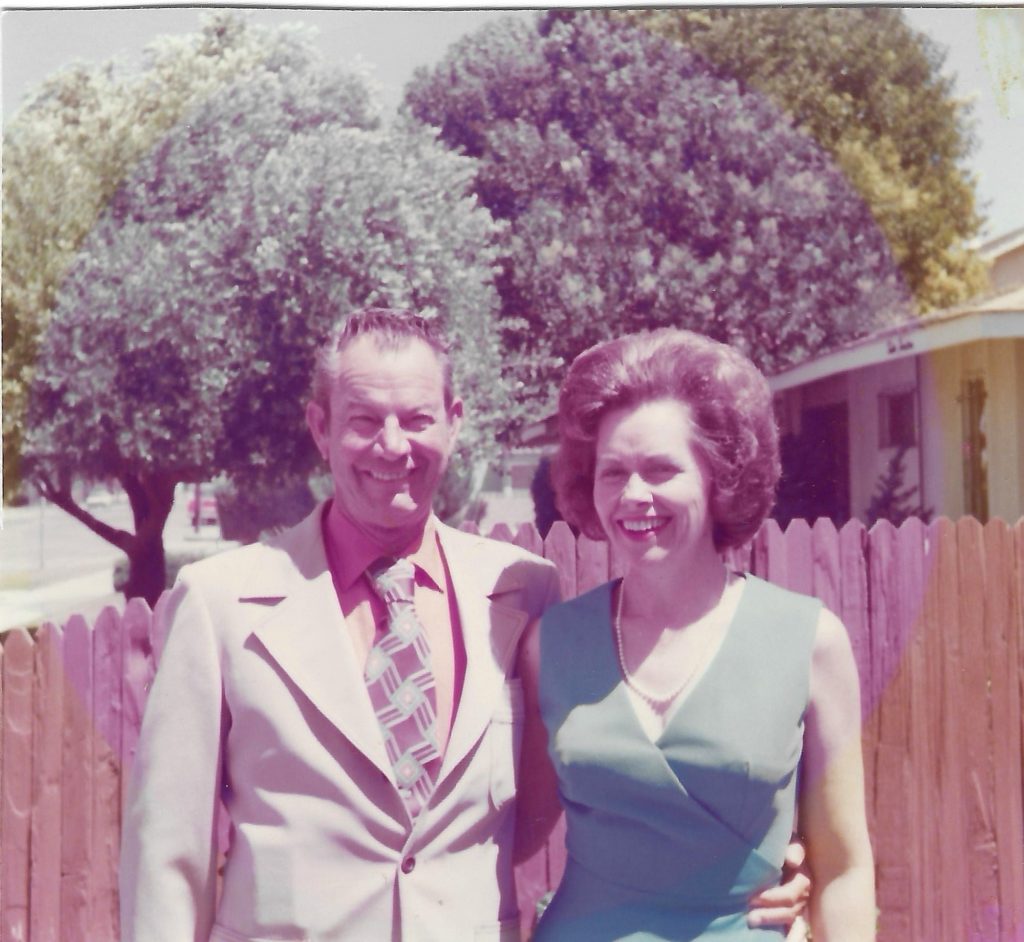
Edward and Virginia retired to Cayucos, on the central coast, where he died in 2010. In 2019 she moved into a house that their son found for her just down the street from his in Oxnard. She oversees a garden and feeds the birds and squirrels daily.
“I still live here and I love it,” she said.
Bruce Eidson had married a Catholic and later came into the Church through what is now OCIA. He embraced Catholicism wholeheartedly, becoming active in the Knights of Columbus. His mother went to church with the family, accompanied him to Knights events, as well as to parish activities for seniors.
He and his wife had discussed asking her about becoming Catholic.
“I said that I didn’t want to push her into doing something. She’s old enough to make her own decisions,” he said.
But his mother was thinking hard about her lack of baptism. She asked a relative who was a Baptist minister if he could baptize her. He declined because he was changing denominations. She loved going to Santa Clara Church with her family and admired their faith.
“I went to bed one night and thought, ‘What am I going to do about my religion?’ ” she said. “And I got up the next morning and said, ‘I’m going to become Catholic.’ ”
As soon as she told her son, he spoke with Love about what would be required. The priest’s first reaction was, “He said, ‘I see her at church all the time. What do you mean she’s not Catholic?’ ” Bruce Eidson said.
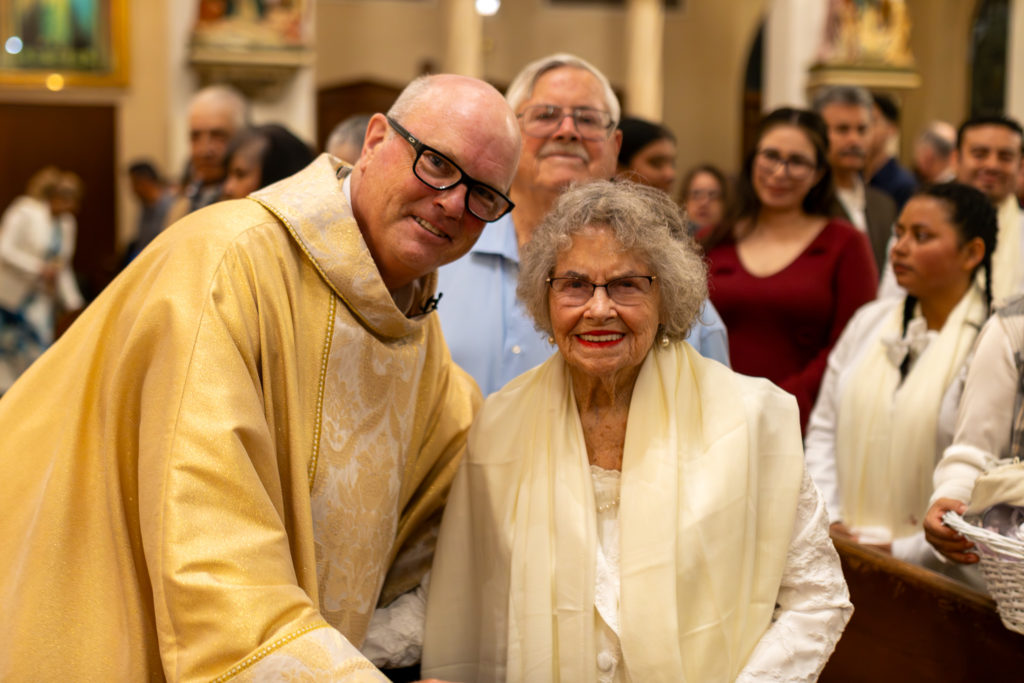
Rather than ask a 97-year-old woman to go through a year of preparation, Love decided to have a simple discussion with her. He was satisfied that she understood the basics of the faith, loved the Catholic Church, and wanted to be part of it.
It was only at that point, Love said, that he learned the family’s background. He knew just enough of Native American history to understand the terrible suffering her father and grandparents endured on the Trail of Tears. He also knew the courage it took to set out for California.
“It’s very biblical in terms of this wonderful elderly lady making this exodus,” he said.
Her baptism left her mind and soul at ease.
“I felt good with everything,” she said. “I came away feeling like I had done the right thing in my heart.”