“Your bishop presides in the place of God,” said Ignatius of Antioch, around A.D. 107.
I remember reading that line and wondering about the phrase “the place of God.” Did Ignatius mean “place” in the sense of location — meaning the presence or company of God? Or did he mean place in the sense of vicarious representation — meaning that the bishop is the agent of God’s will?
My curiosity sent me back to the Greek text, where I learned that the answer is — both! It seems that the earliest documents disagree, due to an error in transcription. Where we read “place,” some ancient manuscripts use the Greek word topos (location) while others say typos (representative). We will almost certainly never know which word St. Ignatius originally used, so we are left with a providential “typo,” a happy fault of some anonymous copyist.
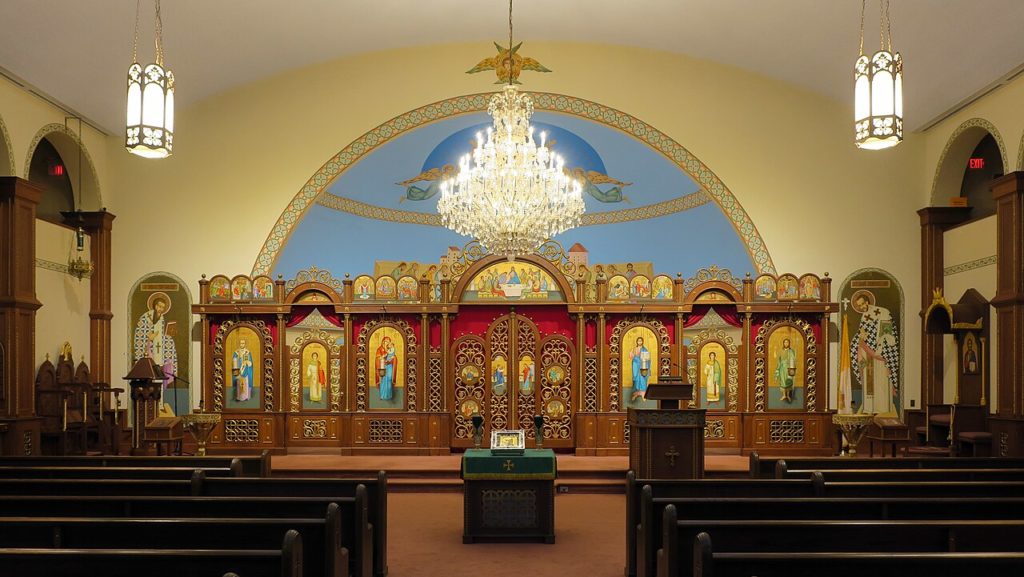
I say this because both senses of place are true, and the two are inseparable. The bishop presides as God’s vicar in a particular diocese. And the bishop presides in God’s house — his holy temple — which is the cathedral. It would be impossible to speak of the cathedral as God’s house without speaking of the bishop as the image of God’s fatherhood on earth.
Our word cathedral has a rich scriptural pedigree. It comes from kathedra, which means “seat of honor” and appears in the Greek versions of the Old Testament. Jesus uses the word in this sense in only one place, but his choice is significant: “The scribes and the Pharisees sit on Moses’ seat (kathedra Mouseos); so practice and observe whatever they tell you” (Matthew 23:2–3).
Kathedra here is a seat of religious and moral authority, from which wise men teach and guide. Jesus distinguishes this “teaching chair” from other seats that were merely honorific; for these latter he used a different, though related, Greek word.
The apostles would occupy these exalted thrones, as were their successors — on whom they laid hands (1 Timothy 5:14) and made their successors. These men, called bishops, would, each in his own city, occupy the kathedra that was greater than the seat of Moses. They would, as Ignatius said, “preside in the place of God.”
In your diocese, you have a cathedral. Thus it has been in every place in every generation since the primitive Church.
The cathedral is where the bishop presides — in God’s place, as God’s typic image.
Thus every bishop is a father, because “Father” is who God is and fathering is what God does (1 Corinthians 4:15). Whether a bishop is teaching from his kathedra, his throne, or standing as celebrant at the altar, he is presiding in God’s place. And because we are God’s children, we are the bishop’s family, and the cathedral is our place too.