Watching Abu Ali Hamiyeh use a stone to hammer the nails that will hold together the wooden planks of his new house on a corner of Beirut’s waterfront, you’d never guess that just a few months ago, Pope Leo XIV passed by that very spot.
At a special Mass nearby that day, the Holy Father called on Lebanese like Hamiyeh to be “builders of peace.”
“The path of mutual hostility and destruction in the horror of war has gone too far, with the deplorable results that are plain for all to see,” said Leo on Dec. 2, not knowing that a few weeks later, the country would be caught up in the largest war the region has seen so far this century.
“We need to change course; we need to educate our hearts for peace,” he urged.
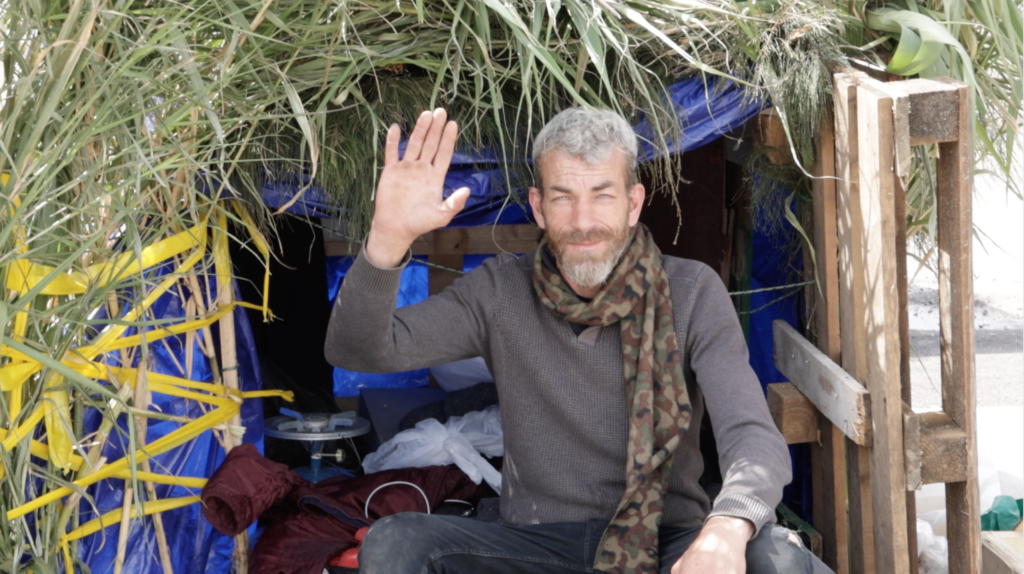
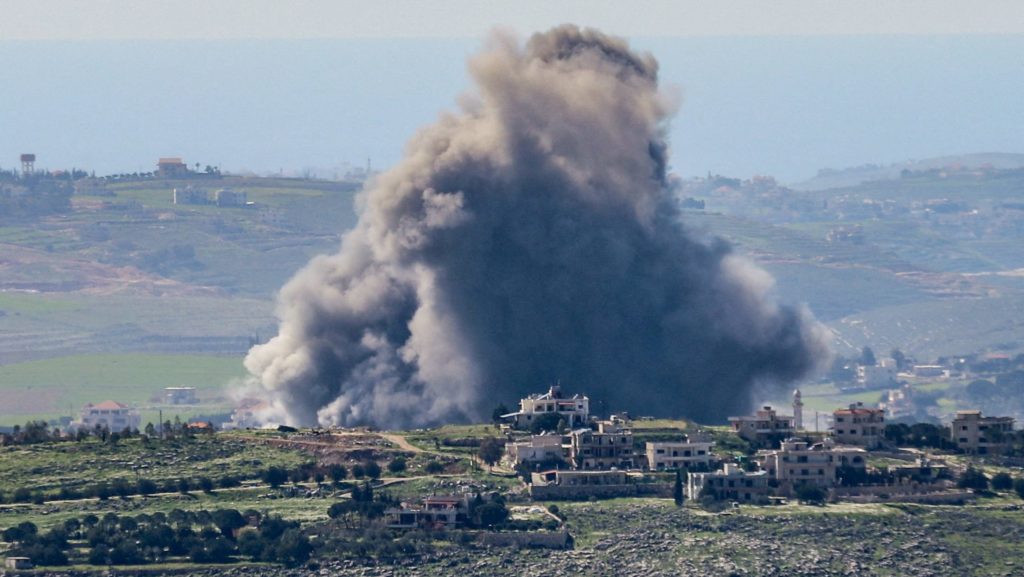
Hamiyeh is one of those displaced by this conflict. A Muslim, he comes from the Bekaa Valley, a stronghold of Hezbollah, an Islamist militant group with which he sympathizes. He, like a million of his compatriots, has had to abandon his home due to evacuation orders from the Israeli army.
No one wants to speak to the press, except Hamiyeh. The day is Friday, March 20, and he speaks with me as he patches together a wooden shack covered with a blue tarp and a thatched roof. He pulls over a plastic trash can and invites me to sit down so we can talk more comfortably.
“Here with us there are Syrians, Palestinians, Jordanians, Turks, Sri Lankans, etc. … Everyone is here. We will not leave this place unless we achieve a great victory. We fought against them for 66 days; we gave martyrs!”
“The Bekaa Valley is the bastion of the resistance; we have given martyrs and blood, and our children, and we remain steadfast on this path of resistance — and we will give even more. Hezbollah is the victorious faction, according to the Quran. Without a doubt, they are victorious,” he says with great conviction.
Hamiyeh regrets not being able to offer me coffee and show me some of that legendary Arab hospitality.
Little by little, the coastline is turning into a refugee camp. No one knows when they will be able to return to their homes, or if there are any homes left to return to.
But in the midst of this conflict, generally viewed from the Israeli or Shiite Muslim perspective, are the Christians. The great overlooked ones in media coverage. Christians who have grown up between one war and another, and who lament that Hezbollah has dragged their country into yet another conflict.
The voice crying out in the wilderness
It is difficult to return to Lebanon and imagine that this is the same country we visited three months ago alongside Pope Leo XIV. At that time, Christians felt for the first time in a long while that the world was seeing them. They raised their voices calling for peace, but their cry has once again been drowned out by the roar of missiles.
I was there covering Leo’s trip that week. While in Lebanon, I was struck when the pope called on young people not to abandon their country, but rather to bet on the future.
“The architects of peace dare to persevere,” said the pope. “Sometimes it is easier to flee or, simply, more practical to go elsewhere. It takes great courage and foresight to stay or return to your country and to recognize that even difficult situations deserve love and dedication.”
Even then, in December of last year, there was talk of an imminent war between Hezbollah and Israel. The Lebanese army’s inability to disarm the Shiite militia — which operates in parallel to state institutions with Iran’s support — had become evident.
The army, with its outdated weaponry and lack of resources, stands powerless against the members of the “Party of God,” which, two days after the first American and Israeli bombs fell on Iran, decided to join the armed struggle and confront the Jewish state.
Lebanese President Joseph Aoun, a Christian, criticized Hezbollah for dragging the country into another conflict that, in his view, was none of their business. Now, amid the bombings and evacuation orders, the Israeli government appears determined to eradicate the militia regardless of the course the war against Iran takes.
Unprotected
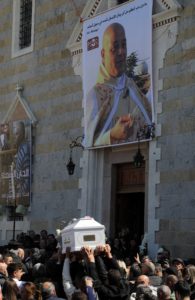
A few days ago, Father Pierre al-Rahi, parish priest of Qlayaa in southern Lebanon, learned that a parishioner’s home had been damaged in an Israeli bombing. Without hesitation, he rushed to help him, never imagining that a second bombing would mortally wound him.
His case, which shook the Lebanese Church, joins that of three young Christians living in Ain Ebel, also in the south, who were attempting to repair a cable on the roof of a house to restore the internet connection.
What has become clear is that in this war, Christians have no immunity whatsoever, and that the Israeli army will make no distinctions in its quest to neutralize Hezbollah’s presence in the south of the country.
Faith endures
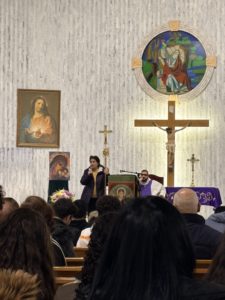
The night that I arrived in Beirut, I was surprised to learn that there was something happening at St. Elias Church. I imagined families at home, paralyzed with fear. But that night, I found members of a community from the Neocatechumenal Way in the parish making their public professions of faith, an important milestone in their process of post-baptismal Christian initiation.
Amid this conflict, which has led to the evacuation of Christian villages in the south of the country, there are still people braving danger to bear witness to the hope they’ve found.
Five people spoke that night as they clung to a golden cross, explaining how God has done the impossible in their lives. All of them, at some point, speak of war and of the pain it has brought. But they also speak of a faith that hasn’t failed them.
The next day, while Hezbollah militants were firing bullets into the air to warn supporters that the Israeli army had issued an evacuation order, a Catholic woman named Rosine began preparations to paint the paschal candle for this year’s Easter Vigil.
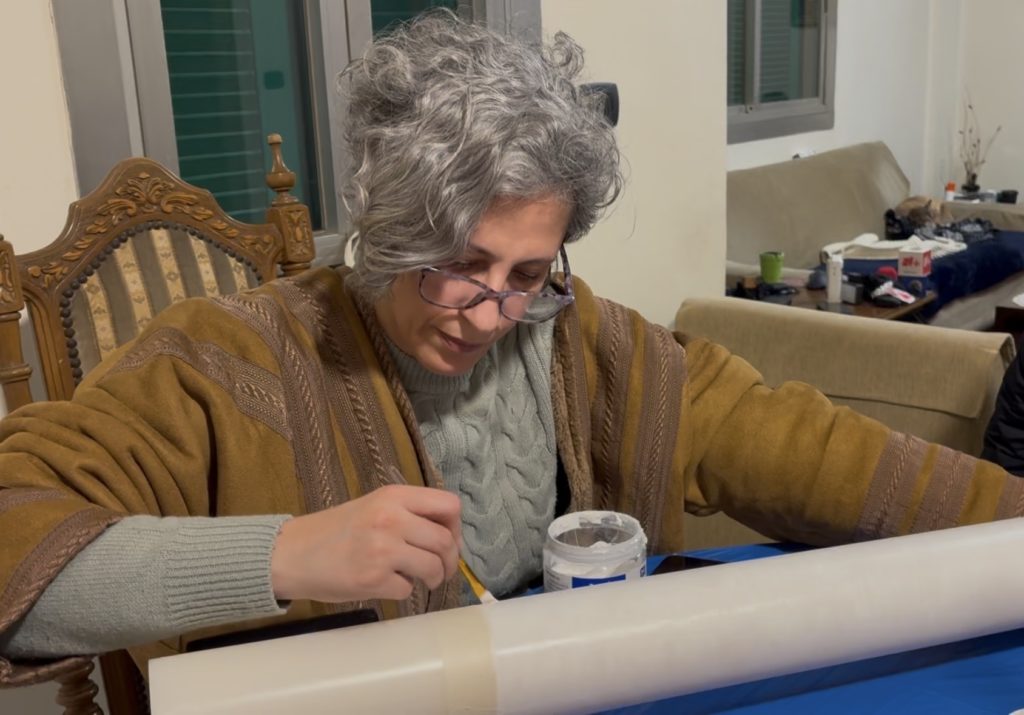
The scene is contradictory. She works on the candle with great calm, while outside gunfire echoes and a new attack is anticipated. Although tomorrow is uncertain, she looks forward to Easter.
This is how Christians live. Mourning the collapse of a once-prosperous country and hoping that this war will be the last one.