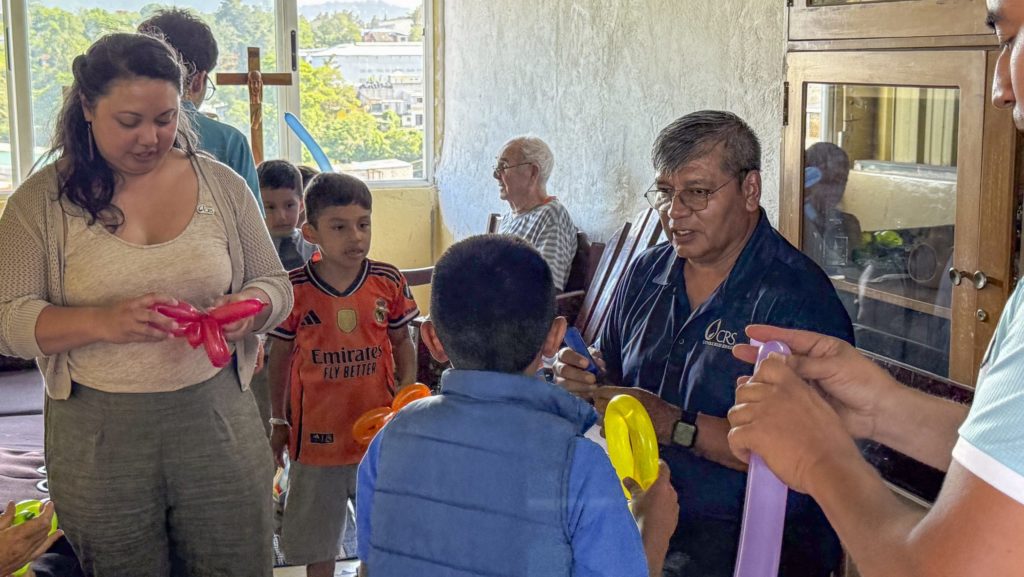
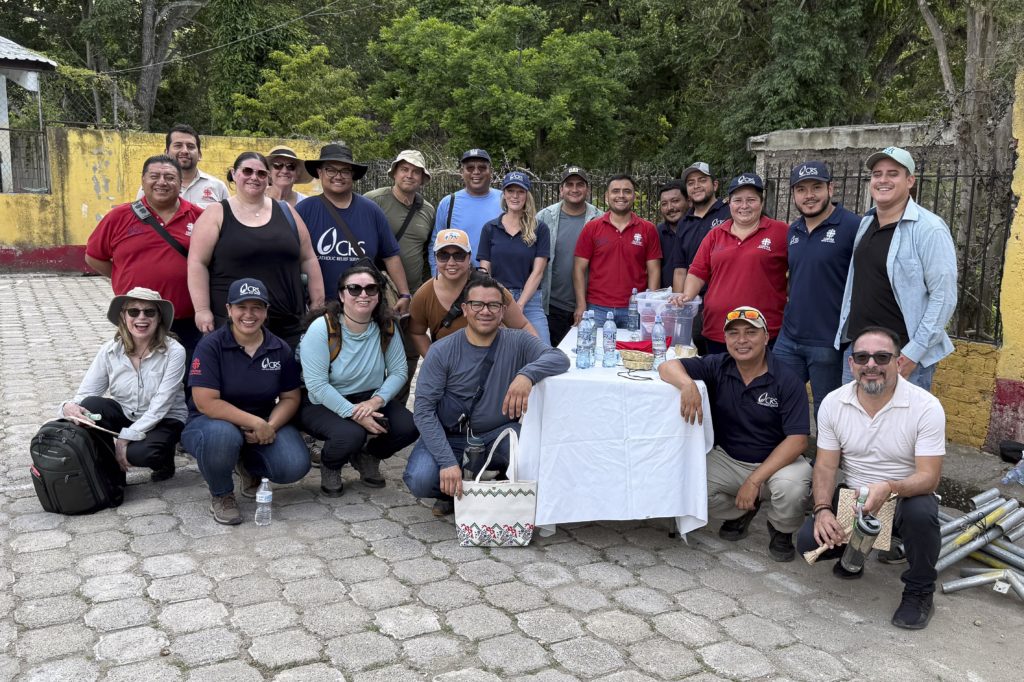
After the U.S. government began cutting funding for international humanitarian aid in 2025, Heidi Villaluz, a California coalition leader for Catholic Relief Services, took a trip to Guatemala in July of that year, coordinated by a group of Maryknoll priests. The purpose was to build relations as well as provide hands-on assistance, as the local impoverished lacked many basic health services and looked for answers.
“It was a way to learn in real time what we had only heard and read about,” said Villaluz about meeting the CRS Guatemala team.
Immediately, what became most disheartening, she said, were real-life examples of how systems that had been in place were already breaking down.
A U.S. government-approved school feeding program that CRS helped implement, one that likely provided the only daily nutritional value for students and even teachers, had been rescinded right in the middle of the school year.
Canceling that contract also meant some students who had received their first in a series of vaccinations didn’t get the necessary follow-up. Villaluz’s group also learned that some food harvested by U.S. farmers and delivered to Guatemala could no longer be accessed in the warehouses, causing it to spoil. CRS vehicles assisting in the program had to be returned to the U.S. government.
This month, Villaluz, a master catechist for the Archdiocese of Los Angeles based in Gardena, has been part of a California CRS group organizing Zoom meetings to help parishes better implement the 2026 Rice Bowl campaign — the distribution and collection of the ubiquitous cardboard boxes that fold into a bank as a daily reminder to donate small amounts of change that add up.
This year’s campaign has a more urgent tone. Drastic budget cuts by the Department of Government Efficiency underway since early 2025 effectively dismantled the United States Agency for International Development (USAID), freezing thousands of programs that CRS once helped facilitate. It reduced CRS’s reach from 124 countries to 86, cutting off some 55 million people from assistance internationally.
Staffing in the U.S. that connected local chapters with state and national legislators, including many in Southern California, has been cut to the bare bones, Villaluz said.
“Those of us who know these stories firsthand have a challenge to connect with those in our pews who may never see or hear what doesn’t make the news, but happens in an everyday life-and-death situation for millions around the world,” said Villaluz, a parishioner of the St. Camillus Center for Pastoral Care near downtown LA.
CRS, founded in 1943 by the United States Conference of Catholic Bishops, is the official international humanitarian agency of the Catholic Church in the U.S. The Rice Bowl program has made the CRS programs most visible during the Lenten season, showing donors how specific dollar amounts serve basic needs. For example, $40 can pay for bags of fertilizer to grow crops in developing countries, or $150 can be applied to growing new fruit trees and help with nutrition progress.
In 2025, the 50th anniversary of the Rice Bowl initiative, more than $9.4 million was raised nationally.
“The Rice Bowl program is something we need especially to focus on now with all that’s happening in the world,” said Tim Clark, co-lead of the CRS San Pedro chapter and affiliated with St. Joseph Church in Long Beach.
“Sending care packages is just one part of it. We need to keep staff members in the countries they serve. Otherwise, a lack of resources will lead to people leaving their homes out of desperation and our immigration issues may be even greater. All the slashing of funds maybe can catapult us forward in showing the importance of all aspects CRS does.”
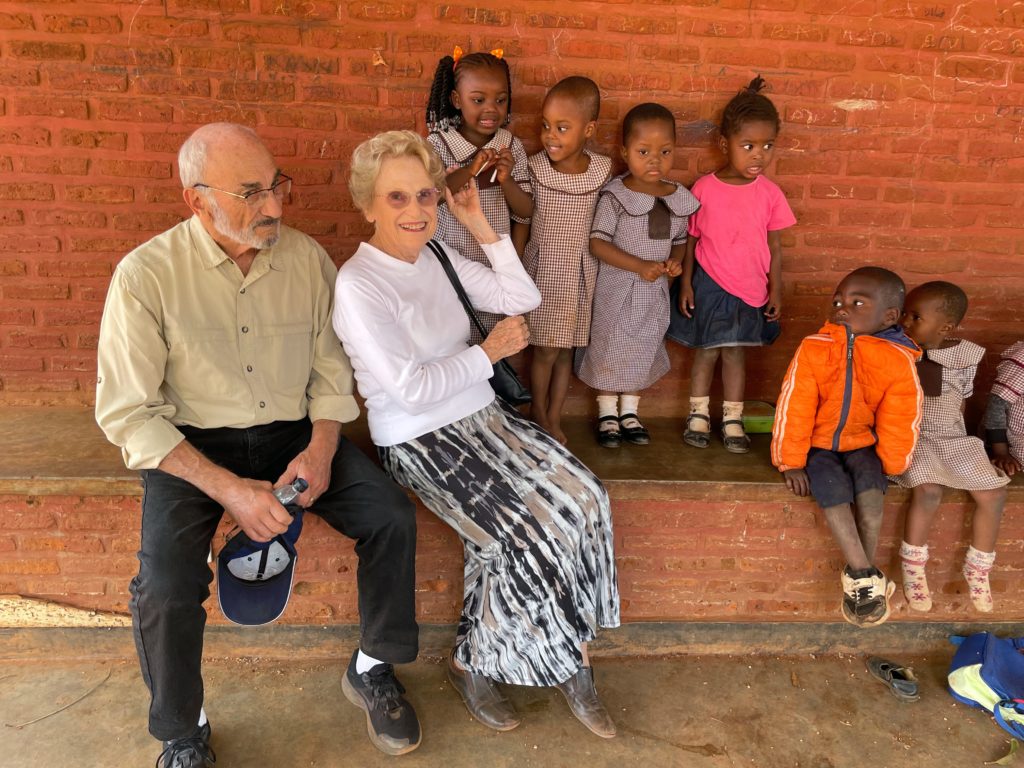
For years, Pia and Anselm Varni, longtime parishioners at St. Mel’s Church in Woodland Hills, have made CRS-related trips to Peru and South Africa, giving presentations of their findings to Southern California groups over the last 40 years. Their latest visit to Malawi in East Africa for an orphan outreach program last year included taking high school students from Don Bosco Tech in Rosemead.
St. Mel’s started its own CRS chapter and has often raised tens of thousands of dollars each campaign.
“We have always believed the CRS Rice Bowl responds to what Christ taught us by word and example,” said Pia Varni. “Through Rice Bowl, we could learn about the culture of the peoples from other parts of the world and the difficulties they face. We would be prompted to question, why are we born here and they are born there? Are we not our brother’s keeper?”
CRS chapters on high school and university campuses have also been more engaged in the education process. Mike Shawver, a theology teacher at LA’s Loyola High School, has led a campus CRS chapter for the last five years.
“It is important for Loyola and other high schools to have a CRS club so students can be connected to the challenges faced by many of our international brothers and sisters,” Shawver said. “Since most of our kids will not be able to travel to these places of need, we have to find ways to connect the needs of the people abroad to our students locally.”
In 2024, Patricia Contreras was asked to head a CRS chapter at Ramona Convent Secondary School in Alhambra, a school sponsored by the Sisters of the Holy Names of Jesus and Mary. Contreras said a regular connection with a CRS representative had been giving students “a better sense of how the organization is an extension of our faith. But her position has since been eliminated due to funding cuts.”
Ramona Convent President Sister Kathleen Callaway, SNJM, is part of the stand-alone nonprofit CRS Cara Noble chapter that started in 2011 when the Lenten program was called Operation Rice Bowl.
One aspect of the annual Rice Bowl program is that 25% of the total collection by parishes in the Archdiocese of Los Angeles goes back to fund grants for local social justice programs. Applications are on the archdiocese’s website.
Cynthia Jones-Campbell, the CRS director for the archdiocese, considers the Rice Bowl program “more than just a fundraiser.”
“It’s really a formational journey with our spiritual discipline into tangible actions,” said Jones-Campbell, a parishioner of Padre Serra Church in Camarillo. “During Lent, we form habits, and it’s important to keep those habits alive through the year.”