This year’s Los Angeles Religious Education Congress (Feb. 19-22) will mark the event’s 70th year, and participants may notice a few novelties.
For example, RECongress will feature for the first time a customized track for priests. Youth Day (held Thursday, Feb. 19) will offer a brand new (and now sold out) option for middle-schoolers. Inside the Arena Hall of the Anaheim Convention Center, milestones from the event’s history will be displayed in a special exhibit.
Meanwhile, the choice for this year’s keynote speaker represents the changing, often challenging landscape facing catechists and modern-day evangelizers.
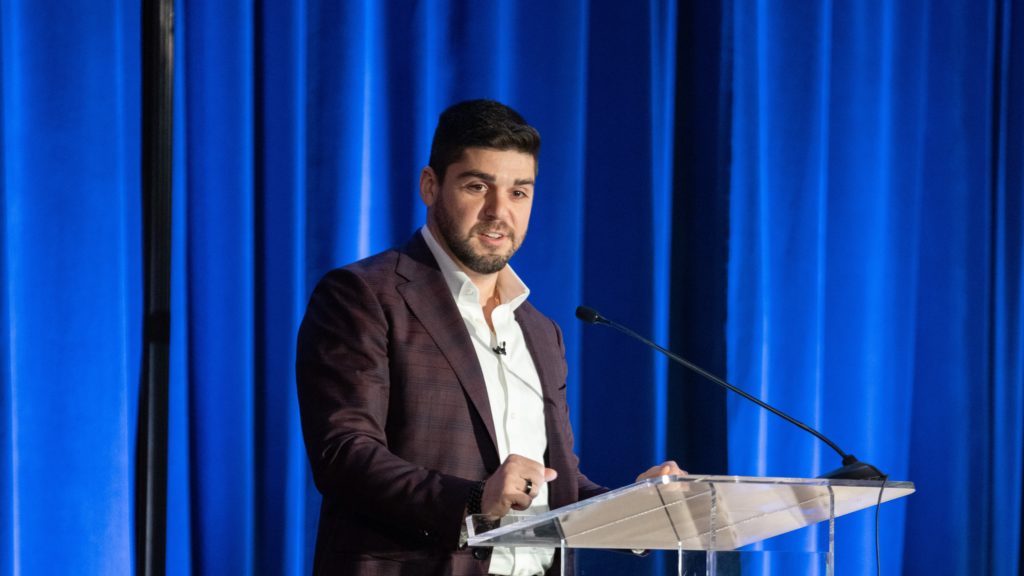
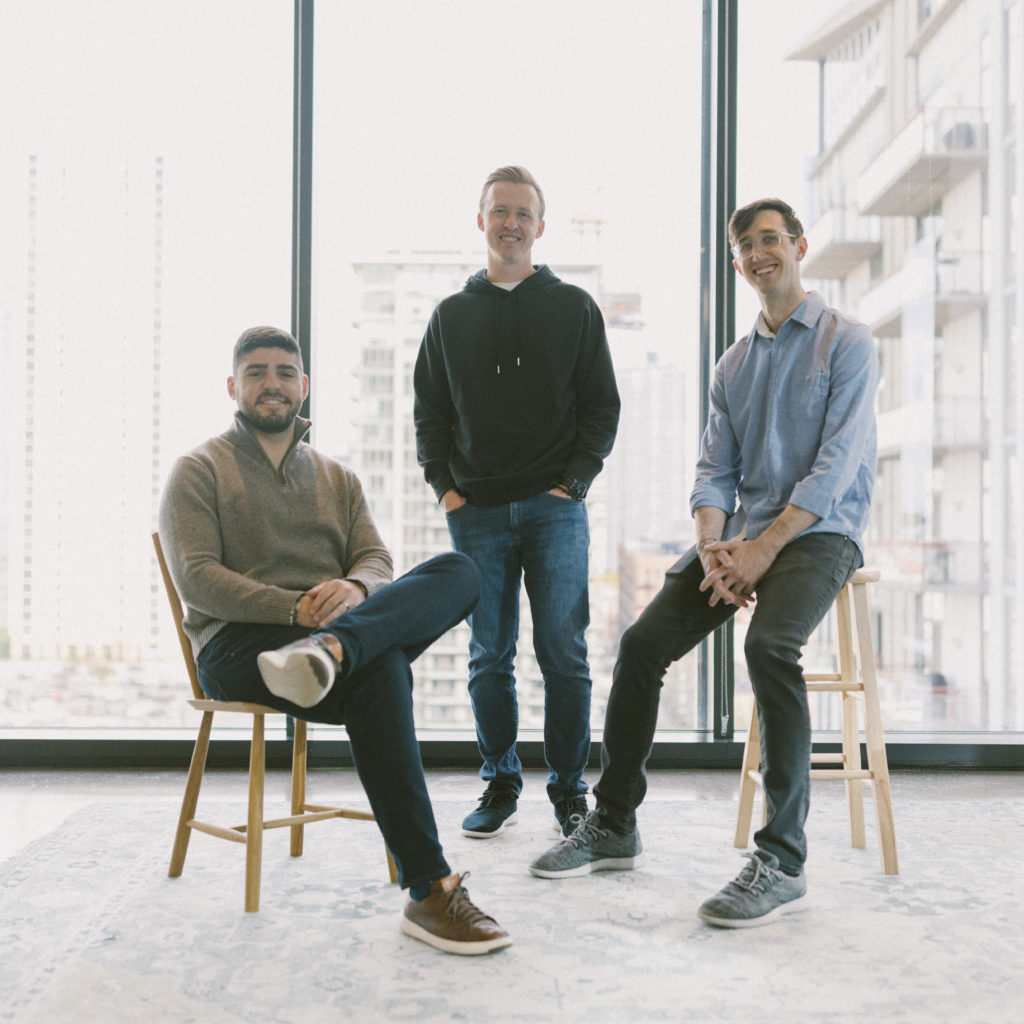
Alessandro DiSanto is the co-founder of the popular prayer app Hallow, which soon became the world’s most-used Catholic app after its launch in 2018. It has featured collaborations with Mark Wahlberg, Gwen Stefani, and Father Mike Schmitz, and in 2024 even ran a Super Bowl commercial.
DiSanto is also no stranger to Los Angeles. Last year, he served as a panelist at the Archdiocese of LA’s Ethical Leadership Lunch. Last month, he was invited back to the event to moderate a panel that included actor Chris Pratt and Hollywood producer Brian Grazer.
To get an idea of what RECongress-goers can expect from his address (scheduled during Saturday morning’s Morning Praise session), Angelus caught up with DiSanto after the Jan. 28 lunch.
Looking back at the last year, what’s changed in the digital space that Hallow is trying to evangelize right now?
I think as always, there’s the temptation to look at the headlines and be frustrated: to lose hope with all the things that are happening in the world.
But at least for as long as we’ve been around, I think this last year has been the most hopeful: It feels like there’s been real momentum across society on publicly reengaging with journeys of faith.
We see that authentic witness inspiring increasing engagement with the Church, resulting both in conversions to the faith among the young, as well as in reversion among the fallen-away, across all age cohorts.
I think there’s a bit of a revival going on. Bible sales are up over 30% year over year. Of all the new users coming in the door to Hallow at the moment, about 50% do not primarily identify as Catholic.
I think that speaks to a moment where there’s some really big questions out in the world, some restlessness with the solutions that the world is proposing, and a hunger for the fullness of the truth to find peace and purpose in their lives. Ultimately, we know the fullness of that purpose is in our identity as children of God and in discerning and surrendering to his will for us.
You work for a prayer app. You’re going to speak at the Religious Education Congress. Where’s the overlap in those two categories for you?
I would argue, “What’s the difference?” I think it’s the same thing.
Our purpose is to help people pray. St. Paul says in the First Letter to the Thessalonians that we ought to pray without ceasing. And ultimately, religious education, when done well, is viewed as the work of forming saints. The pursuit of sainthood is the pursuit of understanding God’s will for our lives and finding the courage and grace to accept and to live it out on a daily basis.
The way we see it is, nobody needs an app to pray, obviously. But in the same way that nobody needs a gym membership or personal trainer to be physically fit, it can often be helpful to have those things — for accountability, for learning, for community, or whatever else.
We try and play a role that speaks into the culture, to meet people where they are in their lives, including in the digital sphere. But ultimately, we don’t want to leave people there — we want to bring them into the fullness of community in the Church, into sacramental life. We’re doing a lot of work in schools and parishes, in particular to bridge the digital to physical divide and to bring people into the one, incarnate body of Christ.
So, I think our lessons are ones of evangelization and outreach, how to leave the 99 and find the one, as Christ tells us to do.
That’s a message I hope to be able to bring to RECongress, and to give people both confidence and hope. Our mission is as important as it has ever been.
You’re going to be speaking to an audience of so-called professional Catholics, who have perhaps “heard it all before.” What’s the one thing you hope to get across to them?
The main theme that I’ll be addressing is surrender. Surrendering ourselves to God and to his will. I’ll also be talking about forgiveness, and understanding that we don’t need to be perfect to come to Christ, as we say before the altar during Mass: “Lord, I’m not worthy that you should enter under my roof, but only say the word and my soul shall be healed.”
I hope for people to have real confidence in believing that, to own that. Jesus says, “Come to me all you who are weary and carry heavy burdens, and I will give you rest.” Let's take that seriously, because we definitely have real burdens. We have some serious challenges! But we can’t solve them alone.
As “professional Catholics,” we go into “job mode” all the time when it comes to our relationship with Christ. But we can’t lose sight that we can’t give what we don’t have, and first and foremost we need to have a relationship with Christ. We need to surrender to his will so that we don’t fall into the traps of egoism or of defining success in terms of this world.
Ultimately, one of the things we’ve learned at Hallow is that that message is actually quite impactful for the people we’re trying to reach. In a world that is so dominated by noise, chaos, and the deification of self that, if we invite people to bring their anxieties, their challenges, their addictions to God, that’s where we truly find rest.
You noted earlier that there’s “a bit of a revival” underway in terms of popular interest in faith and even Catholicism. Is this a temporary “wave” that Hallow is trying to take advantage of, or something to try to extend so it isn’t remembered as a blip on the radar?
I think that focusing on how statistically significant this so-called “revival” actually is, somewhat misses the point.
At the anecdotal or individual level, I think it is our best reaction as a Church to celebrate the return of each prodigal son and daughter, to be excited about the areas where change is happening. It’s the job of each of us in our own families and communities, and in some cases, apostolates, to try and make it as much of a wave as possible.
But the success is not in the numbers or the growth rate or something like that. It’s ultimately: How do we keep meeting one more fellow sinner and bring them into the loving embrace of Christ, so that heaven — through the grace of God — can welcome home another saint?