Pope Leo XIV on Thursday reminded members of the Vatican’s doctrine office of the urgency of offering clear doctrinal guidance in response to new challenges, especially in a context marked by declining religious belief.
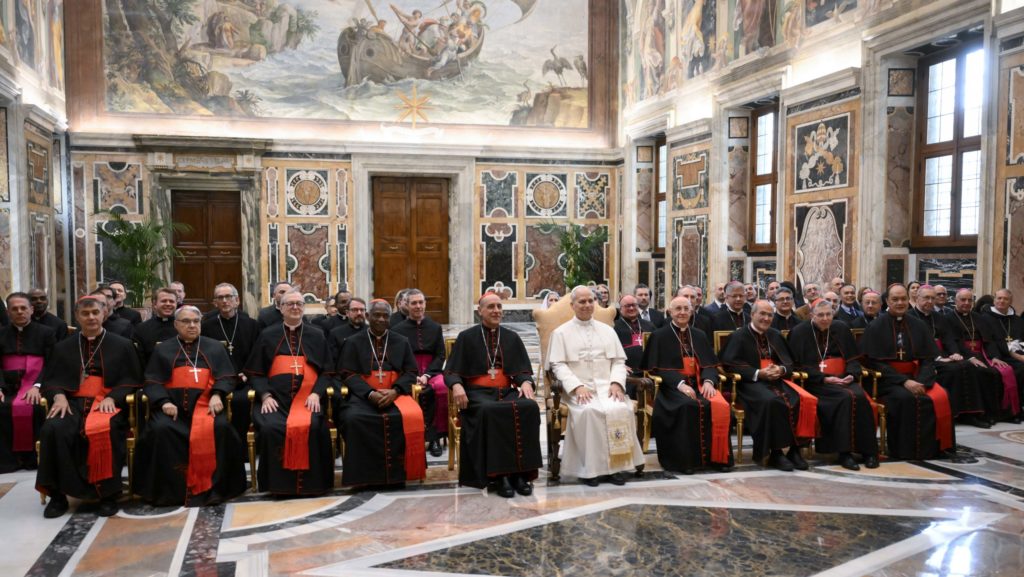
The pope received the participants of the plenary session of the Dicastery for the Doctrine of the Faith (DDF) — one of the oldest and most significant offices in the Holy See — on Jan. 29. He emphasized the “precious service they carry out,” aimed at promoting and safeguarding the integrity of Catholic doctrine in matters of faith and morals.
The mission entrusted to them, the Holy Father stressed, consists in “offering clarifications on the doctrine of the Church” through pastoral and theological guidance on issues that are often both complex and delicate.
Key documents
The pope referred to what he called “the key” documents published by the dicastery during the last two years: the note Gestis Verbisque, on the validity of the sacraments; the declaration Dignitas Infinita, dedicated to human dignity; the “Norms for Proceeding in the Discernment of Alleged Supernatural Phenomena”; the note Antiqua et Nova, focused on the challenges of artificial intelligence; the doctrinal note Mater Populi Fidelis, on certain Marian titles linked to Mary’s cooperation in the work of salvation; and the doctrinal note Una Caro, which underscores the value of marriage as an exclusive union between a man and a woman and presents a defense of monogamy.
Leo did not mention the declaration Fiducia Supplicans, which was published in December 2023, shortly before the DDF’s most recent plenary session.
Fiducia Supplicans, which permitted blessings for couples in irregular situations and same-sex relationships, sparked controversy and questions regarding the Church’s teaching on human sexuality, morality, and the sacrament of marriage in the wake of its publication.
Clear guidance on doctrine
The pope said the work carried out by the Dicastery for the Doctrine of the Faith enables spiritual growth in a “change of era” and offers the faithful “a prompt and clear word from the Church, especially regarding the many new phenomena that are appearing on the scene of history.”
“It also provides valuable guidance to bishops in the exercise of their pastoral ministry as well as to theologians in their service of study and evangelization,” he added.
Leo XIV said the dicastery’s meeting this week, centered on discussion of the transmission of the faith, is an issue he considers “of great urgency in our time.”
Looking at the landscape of contemporary society, the pontiff lamented the increase in those who “do not perceive the Gospel as a fundamental resource for their own existence,” especially many young people, who live “without any reference to God and to the Church.”
The pope also renewed his gratitude to the members of the dicastery for their work, especially when their contribution “is offered in a humble and discreet manner.”