Any priest who has served in a parish with a long history is familiar with the Boomers who, having enough time on their hands, become amateur genealogists.
They seek information of baptismal records from older congregations. They besiege cemeteries trying to track down the graves of ancestral generations.
Sometimes the parishes have to disappoint the genealogists because the bare sacramental record does not record the type of information sought. Webpages do have parochial history and some photographs, but not enough for the investigators.
These are people searching for elements to build an identity. But wouldn’t the key element be the faith that made their ancestors worshippers at the churches they regard as archives now? It is better to participate in the Eucharist at a church where your grandfather received his baptism or his first Communion than to have a piece of paper attesting to the fact.
I have seen people who make pilgrimages to churches important in their family history. I have met friends who came to the parishes I served for an anniversary of a sacramental event of people who had long left this vale of tears, where their parents or grandparents were baptized or married, for instance. To me, these are powerful indicators of how valuable the identity of the Catholic faith is.
An intellectual ancestry documentation would be valuable, too. Recovering the histories of dioceses and parishes would be a real resource, yet few seem to promote the study. When it comes to building up a sense of Catholic identity, biographies of bishops, religious, and exemplary lay people seem like no-brainers.
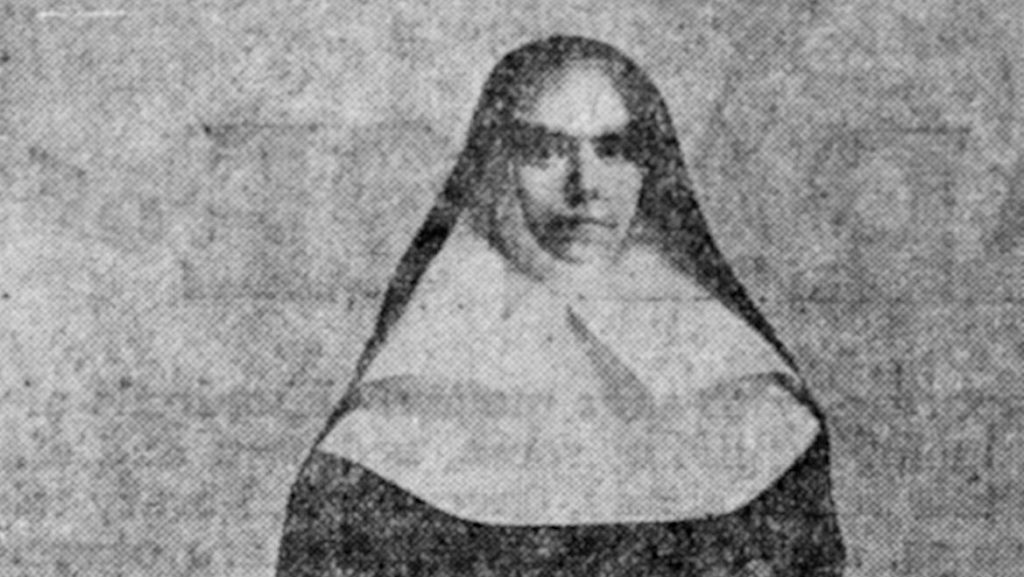
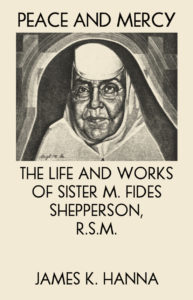
All this came to mind while reading an independently published pamphlet-sized text by James Hanna titled “Peace and Mercy” ($10) on the remarkable tale of Sister Mary Fides Shepperson, the first woman ever admitted to a Catholic college (Duquesne in Pittsburgh) before a career in Catholic education and journalism.
Isabel Shepperson was born in 1867 in Danville in Central Pennsylvania to an Episcopalian father and a Methodist mother. In high school her reading attracted her to Catholicism, especially because of the doctrine of purgatory. She was inspired by the example of St. John Henry Newman, whose personal journey from evangelical faith to Anglicanism to Roman Catholicism made him famous in the English-speaking world.
Newman has some name recognition for us but sadly few American Catholics, I dare to say, have read him. Known for his conversion to Catholicism (and what he suffered for it), few are aware of the complexity of his personality, the stress of his intellectual struggle for the truth, and the depth of his theological insights.
On the day of his reception into the Church, he made a startling confession in a letter to a friend: “May I have only one-tenth part as much faith as I have intellectual conviction where the truth lies! … Perhaps faith and reason are incompatible in one person, or nearly so.”
Shepperson had her own struggles. Her parents sent her to England to visit relatives after her graduation from high school in 1885. If they hoped to distract her from her interest in Catholicism, they were disappointed. She came back from Liverpool in 1887 as a Catholic. And not just a Catholic: she had discovered a vocation to the Sisters of Mercy, a congregation founded by the formidable Catherine McCauley of Dublin. McCauley had been the household manager for a wealthy Protestant couple who eventually made her their heir. Starting out with works of charity for the poor, she was encouraged by the archbishop of Dublin to found a religious congregation.
Shepperson went from Danville to a Sisters of Mercy convent in Beatty Station, Pennsylvania, for a year of study. A year later she was in the novitiate of the congregation in Pittsburgh, at the same time as St. Katherine Drexel was there receiving the preparation she’d need to later found the Sisters of the Blessed Sacrament.
Like Drexel, Shepperson, who took the name of Sister Mary Fides, had a varied curriculum vitae. She was a poet, an author of several books, gaining the first doctorate in philosophy by a woman at the University of Pittsburgh and an educator in many levels of Catholic schools, including being a founder of a Catholic college.
She was an American blue-stocking woman writer in a nun’s veil, and her writings included a social dimension. She was a pacifist in the early stages of World War I, before U. S. involvement. Then she was a voice encouraging Americans to wage the war that was supposed to be fought to end all wars.
Her essay on the death on the battlefield of famous poet Joyce Kilmer indicated her change of position. After the war, she returned to the pacifists’ ranks, only changing after the beginning of World War II. After that war, her writings seem to indicate an embrace of the idea of a world government, “whose rulers, blessed by God, shall have both the will and the power to rule the world with wisdom and equity.”
Hanna doesn’t analyze the intellectual content of Fides’ prolific output and is satisfied with presenting us a brief introduction of an influencer in her own day who may be forgotten. The monograph is a resource for future historians on Catholic intellectual life in the first half of the 20th century. I would have wished for more connections made with other Catholic movements and political trends, but that will have to be for other writers to research.