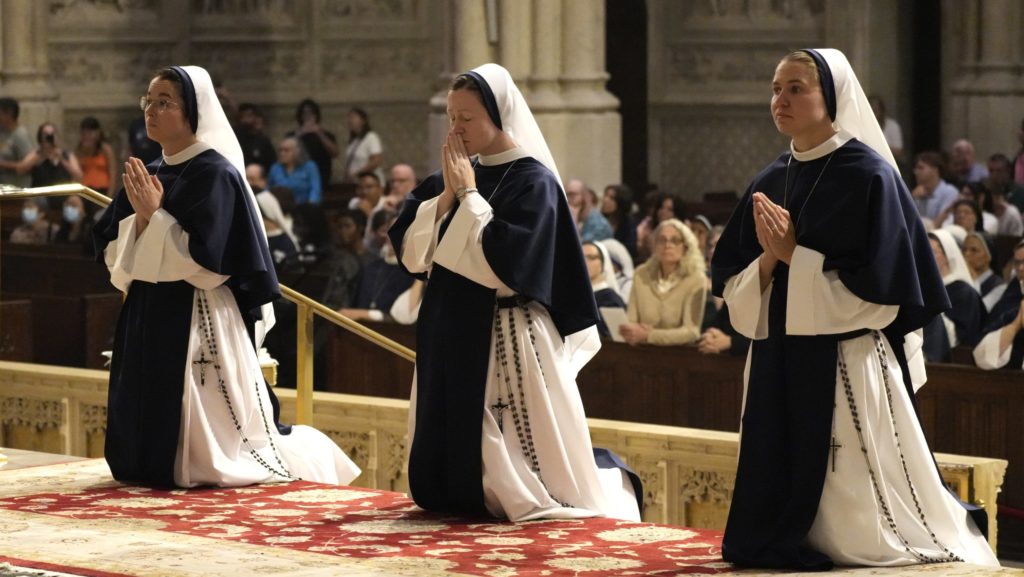
The large majority of religious institutions in the U.S. reported they had no one professing perpetual vows in 2025, a new report found.
Georgetown University’s Center for Applied Research in the Apostolate (CARA) found in its report, “Women and Men Professing Perpetual Vows in Religious Life: The Profession Class of 2025,” that 82% of religious institutions had no one professing perpetual vows in 2025.
About 1 in 10 institutes said they had one perpetual profession, while 8% said they had anywhere from two to nine members professing perpetual vows in 2025, according to the report.
Overall, responding religious institutes reported 179 total perpetual vows — 74 women and 105 men — in 2025.
Out of those who made perpetual vows, 92% reported having been Catholic since birth, while the rest who experienced conversion did so at the average age of 20 years old. Nearly all respondents reported having at least one Catholic parent and were raised by their biological parents.
Around 69% were born in the U.S., while 12% originated from Asia, 9% from Latin America, and 7% from Africa.
Around half of respondents said they attended a Catholic elementary or middle school, while a third attended a Catholic high school, and about 39% attended a Catholic college or university.
Prior to entering religious life, almost all responding religious from the profession class of 2025 reported participating in prayer groups on a regular basis, and about 92% attended at least one discernment program before entering.
More than half of respondents (53%) said they were discouraged from entering religious life by one or more persons.
“Since 2010, the Secretariat of Clergy, Consecrated Life, and Vocations of the United States Conference of Catholic Bishops (USCCB) has commissioned the Center for Applied Research in the Apostolate (CARA) at Georgetown University to conduct a survey of women and men religious who profess perpetual vows each year in a religious congregation, province, or monastery based in the United States,” the report stated. “For this project, CARA was asked to gather information about the characteristics and experiences of these religious and report the findings to the secretariat for use with the World Day of Consecrated Life in February.”
The CARA study includes responses from 520 out of 723 major superiors, equaling a response rate of about 72% among religious institutions in the U.S. Out of the 179 identified professions, a total of 130, or 73% of 179, responded to the survey by Jan. 6.