If you’re reading this, you’ve probably already heard the news that former Angelus Vatican correspondent and longtime collaborator John L. Allen Jr. died Jan. 22 in Rome at 61 following a long battle with cancer.
For anyone with a remote interest in Catholic news — not to mention for readers of the news site he founded, CruxNow.com , and Angelus — the enormity of his loss is hard to fathom.
Having covered the Vatican for three decades, John was in essence the dean of English-speaking Vaticanistas, a wildly gifted writer whose reporting chops, deeply sourced connections, freakishly encyclopedic memory, and knack for mentorship shaped a generation of Catholic journalists.
I was one of them. A geek from birth, I’d read his book about the election of Pope Benedict XVI during high school and followed his dispatches for the National Catholic Reporter over the years. I couldn’t have imagined at the time that this exposure to John’s writing would prepare me for a job in the Catholic press years later, something that was never in my career plans.
John made the inner workings of the Catholic Church interesting, accessible, and even exciting. He was a trusted expert voice for secular news outlets covering Catholicism, known particularly for the insider perspective he brought to CNN coverage of major Church events. Ahead of the last two conclaves, English-speaking voting cardinals were known to have read his “Papabile of the Day” profiles for the National Catholic Reporter and Crux in the days before entering the Sistine Chapel.
For those of us who enjoyed his friendship, John was a repository of ecclesial anecdotes and insights, war stories from the Vatican press corps, and of course, Roman restaurant recommendations. He and his wife, Elise Ann Allen (another familiar name to Angelus readers) enjoyed a reputation as gracious hosts and fine company among a broad variety of characters in Catholic media.
John also had a fateful, little-known connection with the Archdiocese of Los Angeles. In the early 1990s, the newly minted editor of The Tidings, Tod Tamberg, was introduced to John — then a Kansas native teaching at Notre Dame High School in Sherman Oaks — through friends who also taught at the school.
The two struck up a friendship, and Tamberg invited John to start writing for The Tidings. That invitation launched a career that led to John becoming a famous author and journalist covering the Catholic Church. I can confirm Tamberg’s recollection that John “would often mention that his first paid writing gig in the Church was with The Tidings.”
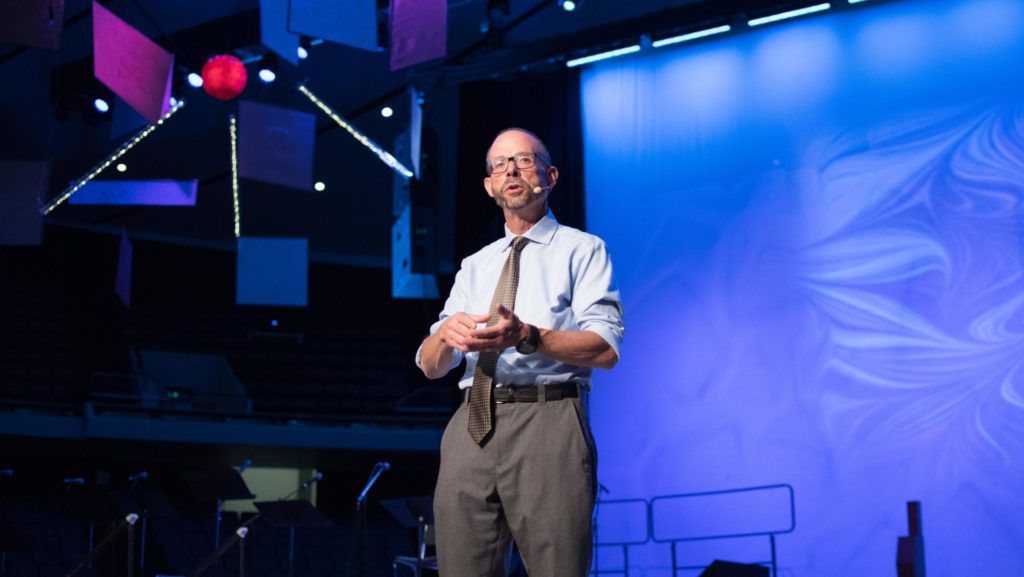
During that trajectory, John became a favorite and mainstay of the LA Religious Education Congress held every year in Anaheim, drawing thousands to his speaking sessions. In 2016, shortly after his recently founded news venture Crux ended its partnership with the Boston Globe, John was invited by then-Editor-in-Chief J.D. Long García to help launch Angelus, the successor of The Tidings, as a contributor, along with Crux co-founder Inés San Martín.
Shortly after I arrived as editor in early 2018, Angelus expanded its agreement with Crux to share content and feature John as a weekly contributor in the magazine. For seven years, this put me in the bizarre position of being, in a sense, John’s editor — something that would only make sense in an alternate universe.
Despite the glaring gap of expertise and experience between the two of us, John never sought to remind me of it. He embraced my writing prompts and suggestions, but also improved them. His copy was always clean, and (almost) always on deadline. He was an editor’s dream.
Over the years, readers responded with a lot of feedback — mostly praise, and some criticism — about John’s articles in Angelus, a testament to how closely he was read. He was tough but fair, attracting the respect of even major ecclesial figures who didn’t always agree with him.
Upon his death, Archbishop José H. Gomez mourned John as “a good friend, a fine journalist,” and he prayed for him:
“May Our Lady of Guadalupe embrace him in the mantle of her love, and may God grant him peace in the love that never ends.”
In his own tribute, Archbishop Emeritus Cardinal Roger Mahony praised John’s “balanced reporting across ideological lines, his access to trusted sources inside the Vatican, and his ability to explain complex Church dynamics to secular audiences.”
I last saw John in May 2025, while in Rome during and after the conclave that elected Pope Leo XIV.
One of our exchanges came on the afternoon of May 8, when we bumped into each other on the street outside of St. Peter’s Square. He was visibly tired from his constant TV appearances and the week’s cancer treatments. Before moving on, I couldn’t resist running a rumor by him that I’d just heard from a former Vatican official minutes earlier about a pre-conclave deal cut between two papabili (front-runners for the papacy) to ensure the election of one of them.
“That’s funny, I just heard the same rumor from someone with The New York Times,” John replied. “But what the heck do they know?”
John’s skepticism was warranted. Two hours later came the white smoke, then the Habemus Papam! announcing the election of Robert Francis Prevost, an American who John had hosted in his own home a few months earlier. The rumor could not have been more wrong.
I consider that episode a fitting reminder of John’s enduring legacy: a rare breed of Catholic author, speaker, and journalist with the kind of expertise that is usually sorely lacking in secular media coverage of the Catholic Church.
The rest of us still have a lot to learn from him.