I don’t understand the “Wicked” series. I don’t understand why every woman I know loves it. Through simple logical syllogism we can surmise that I don’t understand women.
When I attended a screening of the first “Wicked” film last year, I was but one of two men in a packed theater: me, shamefaced in the back row, and a rotund man wearing a flamingo pink bathrobe beaming beatifically in the front. When the end credits rolled, he stood up and faced the applause, proclaimed the color grading terrible, then stormed out in a fluffy huff. It was a nice reminder that for all our many differences, the Y chromosome retains some solidarity.
Here we are a year later for that film’s sequel, “Wicked: For Good.” The series is an adaptation of the Broadway musical, itself a revisionist retelling of “The Wizard of Oz,” in which the Wicked Witch of the West is actually the hero. For those keeping track at home, the arc of the franchise is now a book turned movie turned book turned musical turned movie turned sequel turned conversation I’ll have to dance around on the dating apps.
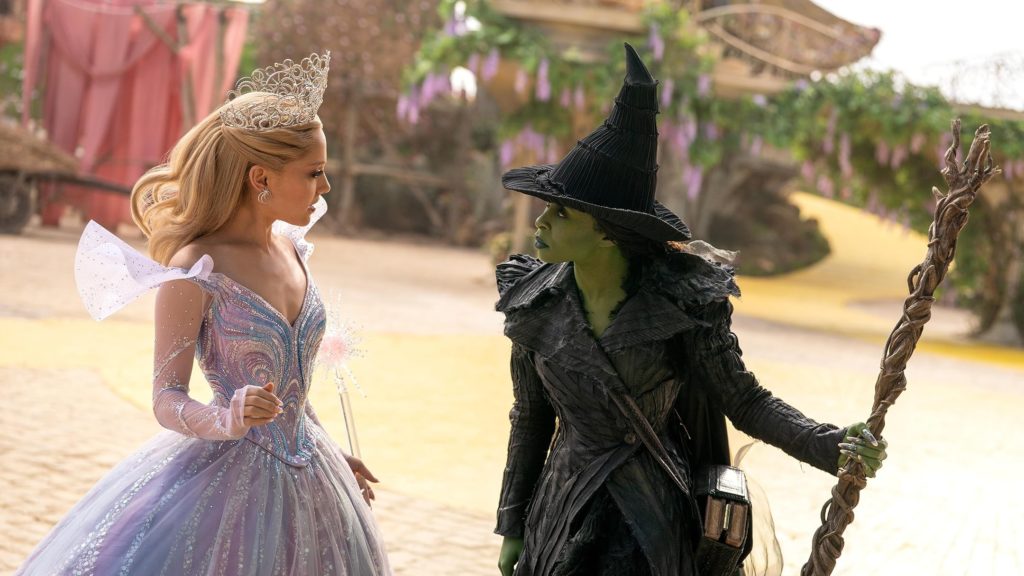
The Witch (Cynthia Erivo), here called Elphaba, has broken against the not-so-wonderful Wizard of Oz (Jeff Goldblum) over his oppression of talking animals in the kingdom. Elphaba takes to the streets, or in this case skies, to fight against his dictatorship. All that “wicked witch of the west” claptrap is just the Wizard’s propaganda campaign against her, as is his promotion of Glinda the Good Witch as a regime-friendly alternative.
Glinda (Ariana Grande) was schoolgirl chums with Elphaba, so she knows the Wizard is lying. A munchkin-sized part of her still believes she can do good within a corrupt system, and the rest of her that doesn’t believe is more preoccupied with her upcoming wedding to the dreamy Prince Fiyero (Jonathan Bailey), the captain of the Emerald City guards who is also distracted by his mutual attraction to Elphaba.
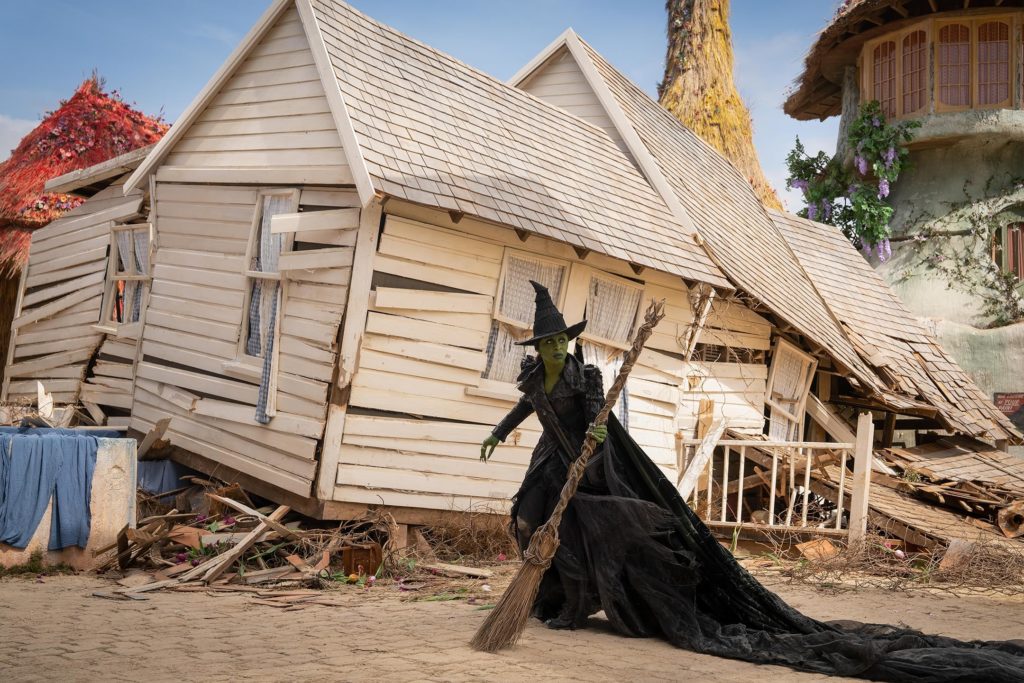
This fraught socio-political-sexual quagmire is made even more complicated by the Midwestern child who drops a house on Elphaba’s sister (The Wicked Witch of the East, called Nessarose in the movie). Not that the two ever got along, but anyone with a sibling knows that only you are allowed to squash them. Dorothy is filmed like the shark from Jaws: we never see a full profile of her. At most, we see her braids bouncing ominously down the Yellow Brick Road. This is either a clever filmmaking decision or a way to skirt litigation with the Garland-Minnelli estate.
Which is all to say this is hot nonsense, with nothing useful to say about fascism, propaganda, or the nebulous nature of Good.
It’s not that I’m so attached to childhood memories of the 1939 film to reject revisionism out of hand (those flying monkeys gave me too many nightmares for that). I don’t even disagree with the premise that truth is often more negotiated than settled. (So sings the Wizard in his big number, “where I’m from, we believe all sorts of things that aren’t true. We call it history.”) Things aren’t always black and white, and after all, the difference between a civil war and a revolution is whoever seizes the governor’s mansion first.
What the film offers is not ambiguity but another binary, in which the narrative is switched up but remains simplistic. Elphaba is good because she opposes evil; the Wizard is evil because, well, the story demands it. His oppression of talking animals feels worked backward from the fascism metaphor, a placeholder evil with no explanation of what he gains from oppressing them. All fascist persecution of minorities is inherently irrational, but there is usually some utilitarian motive behind it, like material gain. The Wizard seems to be in it for pure love of the game, which makes the analogy all the more hollow.
With that failing, what we’re left with is a rather trite message on the power of friendship delivered by two people who don’t seem to particularly like one another. The films prioritize plot over character, wasting time on useless Oz machinations while hoping that if the witches repeatedly tell the other they’re friends, we’ll have no choice but to believe it. But friendship is based in works, not faith, and the ending rides on an emotional payout they’ve done nothing to invest in.
Erivo pouts her way through most of this, though that’s more a fault of her character than her acting abilities. Elphaba is too morally righteous to be much fun, an issue endemic to the stage musical.
Glinda remains a hoot if only because Grande remains as a skilled comedienne. (Say what you will about the Nickelodeon child actor salt mines, but they did produce actors that can mine the daylights out of some salt.) In common chorus with that bathrobed man in the theater, her coloring remains off. She is supposed to be blonde, but looks washed out, as if lit by perpetual flash photography. She reminds me of nothing more than Thor’s bleached eyebrows in his first Marvel movie.
At the end of the day, Oz just isn’t the sandbox the film needs it to be, with a society and characters worth interrogating. It’s more like a Star Trek planet: its charm arises from the noticeable seams, the lack of a world beyond the needs of the immediate story.
To state the obvious, Oz isn’t a real place; it’s an MGM backlot, a matte painting, an extended metaphor for the gold standard and William Jennings Bryan, at best the CTE dreams of a concussed redneck. What do I care about is Oz’s tax code, being a land meant to evaporate beyond Dorothy’s object permanence.
“Wicked: For Good” makes that point against its own will. Every scene with that jayhawk just out of frame only underlines just how flimsy the whole shindig is.