How to think about the synod process from the past three years
Marshall McLuhan was a Canadian communication guru of the last century who was probably best known for saying, “The medium is the message.” As the second and last session of the Synod on Synodality draws near, it occurs to me that something along those lines is apparently what […]
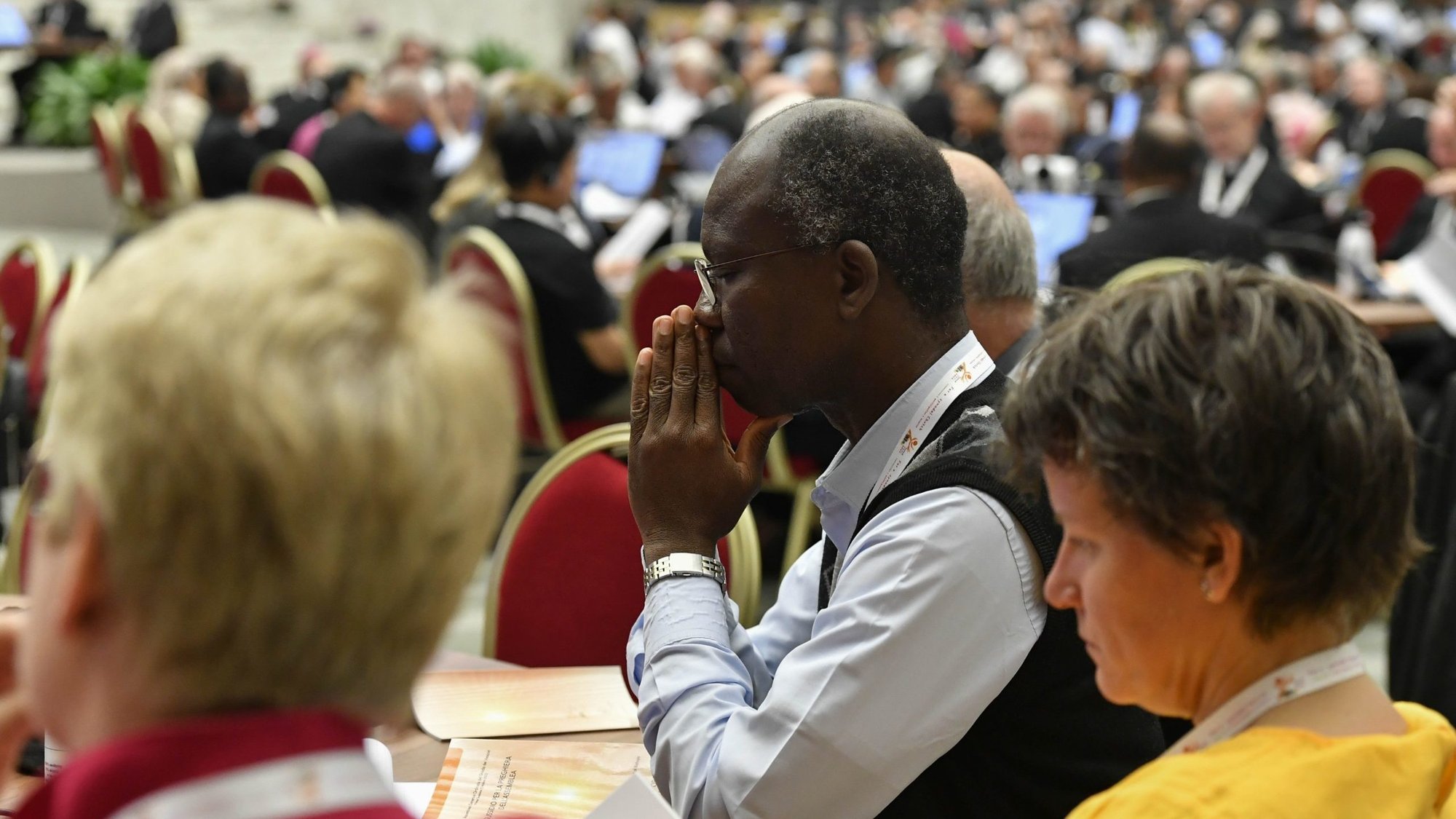
Marshall McLuhan was a Canadian communication guru of the last century who was probably best known for saying, “The medium is the message.” As the second and last session of the Synod on Synodality draws near, it occurs to me that something along those lines is apparently what Pope Francis has in mind for the synod, but in a variant form: “The process is the product.”
Although an ever-growing body of synodal reports, summaries, and syntheses already exists, the concluding session, Oct. 2-27, will add many more. A few months after that, the pope will deliver his own summing up, telling us what he thinks the Synod on Synodality has accomplished. I expect it to be some version of the McLuhanesque insight just suggested: synodality itself is the synod’s result.
Pending that, here are a few thoughts on where we’ve been so far in the three years since Francis launched this process.
Despite lots of happy talk by the synod’s organizers and boosters about how well things have gone in enlisting the support of the Catholic masses for a synodal Church, I have yet to see much evidence of a truly large number climbing aboard the synodal bandwagon.
Example: the report from the recently concluded diocesan phase of the synod project in the U.S. proudly declared that 700,000 people had taken part. Now, 700,000 are indeed quite a few people, but they are a comparative handful next to the 66.8 million who are the total body of the Church in America.
In due course we shall be told what steps the process is moving Francis to adopt. Despite mention in some national reports from Western Europe of ordaining women deacons, the pope has already ruled that out because it would involve conferring the sacrament of orders on them.
As for ordaining viri probati — older men of good reputation, most of them married, to serve as priests in places (think Western Europe again) where the priest shortage is acute — we shall see.
And only time will tell whether, as synod organizers keep insisting, the Synod on Synodality has produced a real groundswell of support among the laity for making the process called synodality a permanent feature of Church life. For sure, though, it will leave behind it a substantial new bureaucracy committed to fanning the synodal flame.
In this perspective, it may not matter too much that the instrumentum laboris — the working document meant to guide the synod’s deliberations in October — has turned out mostly to be 22 closely printed pages about structures and procedures of the assembly itself.
Seeking, however, to close on an inspirational note, the document strains for an elevated tone:
“Everything in this world is connected and is marked by a restless longing for the other. Everything is a call to a relationship … which will ultimately be fulfilled in the convivial sociality of differences, fully realized at the eschatological banquet prepared by God on his holy mountain. … When the members of the Church allow themselves to be led by the Spirit of the Lord to horizons that they had not previously glimpsed, they experience immeasurable joy. In its beauty, humility, and simplicity, this is the ongoing conversion of the way of being the Church that the synodal process invites us to undertake.”
Good grief! Whoever wrote that is undoubtedly a good soul who wishes the Church well. But it leaves me with a McLuhanesque fear: What if the process that produced those sentences turns out to be the product?

Russell Shaw is the author of more than 20 books and numerous articles and commentaries. He was information director of the NCCB/USCC and the Knights of Columbus.